
What does the King of Swords mean in tarot?
The King of Swords stands for mature thinking and principles put into practice. Serious commitment shows up in clear agreements, respected boundaries and consistent behavior. His judgment earns trust because you can see, and question, the reasons behind it.
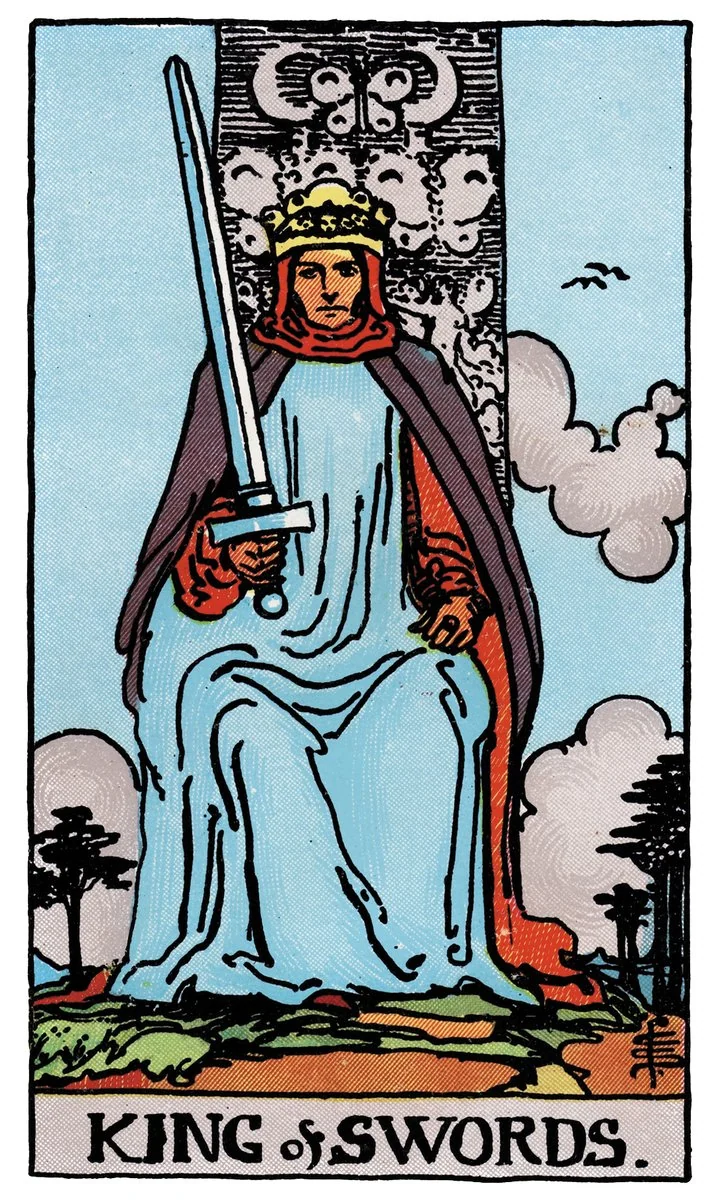
In the classic card, the King sits facing forward with his sword raised, against a calmer background than the charging Knight’s. Thought has settled into a position. How he uses that position decides whether it supports reliable agreements or silences other people. This role isn’t tied to gender.
- Upright keywords
- clear thinking, sound judgment, fairness, firm principles, authority, accountability
- Reversed keywords
- rigidity, control, double standards, misused authority, dismissing feelings, fear of being wrong
- Sound judgment
The King sits where decisions get made. Responsible judgment explains its evidence and changes when the relevant facts change. A good sign is whether someone can question a conclusion without losing respect for doing so.
- Principle
His open, forward-facing stance suggests rules you can understand ahead of time. In relationships, those may be about boundaries and commitments. Rules that apply to only one person, or shift whenever it’s convenient, point to a different use of power.
- Accountability
What he says and decides shapes other people’s choices. This King asks who takes responsibility for that influence. As advice, he says use reason to make the conditions clear and hear objections, including the emotional experiences that bear on the decision.
King of Swords upright and reversed meaning
King of Swords upright meaning
Upright, the King of Swords means judgment rests on reasons you can explain, and the same standards apply to everyone.
Clear agreements
Positions and responsibilities can be stated plainly, and disagreement gets a consistent response. Check whether the rules were explained, whether they were understood and whether they also apply to the person making the decision.
Thinking for yourself
You can hold on to important principles under pressure without refusing to be questioned. Name the value and the evidence behind your position, and notice the difference between changing your mind for a good reason and digging in out of pride.
King of Swords reversed meaning
Reversed, the King of Swords usually means judgment has become a tool for control, or a way to avoid feelings and responsibility.
Unequal authority
One person may wave away other people’s experience, rewrite the rules or make disagreement impossible. Look at who gets to speak, who gets to change an agreement and who lives with the consequences.
Rigid certainty
Fear of being wrong or losing control can make new information feel like a threat. Ask what feels at stake, and look at the evidence again. Admitting uncertainty makes room for a more responsible choice.
Is the King of Swords a yes or no card?
Yes. The King of Swords is a yes, especially for decisions backed by solid evidence and clear responsibility. He favors choices you can explain and stand behind, so if you’ve done the thinking and the terms are fair, the answer leans yes. Reversed, it leans no until unfair rules, rigid thinking or one-sided control have been dealt with.
King of Swords symbolism
The forward-facing pose and raised sword put his position in plain view; the reasons and consequences behind it need to be just as visible.
- Raised sword
He holds the blade upright, tilted slightly to one side.
The bare blade is held steadily, which makes discernment a practiced skill he can use at any time. Compared with the new insight of the Ace of Swords, the King adds experience and a position where his decisions affect other people. That’s why his judgment needs reasons he can explain and responsibility he accepts.
- Forward-facing throne
The King sits squarely on his throne, facing the viewer.
Facing forward, he presents his position openly, and the throne gives it institutional weight. A personal conclusion can become a rule for others. Upright and reversed differ in whether that rule is consistent, whether it can be explained and whether the authority accepts the consequences it imposes.
- Carvings on the throne
Butterflies and crescent moons decorate the throne.
Butterflies and crescents bring change into a solid throne: butterflies transform, and the moon moves through phases. Alongside the sword’s link to thought, they suggest understanding that can keep growing. A stable principle doesn’t have to freeze a conclusion in place.
- Calmer landscape
Trees stand upright under a fairly settled sky.
The trees look less strained than those behind the charging Knight, and the King isn’t rushing anywhere. The calmer setting leaves room for review and reflection. Reversed, the same steadiness can harden into rigidity if it stops letting new information in.
Watercolor deck
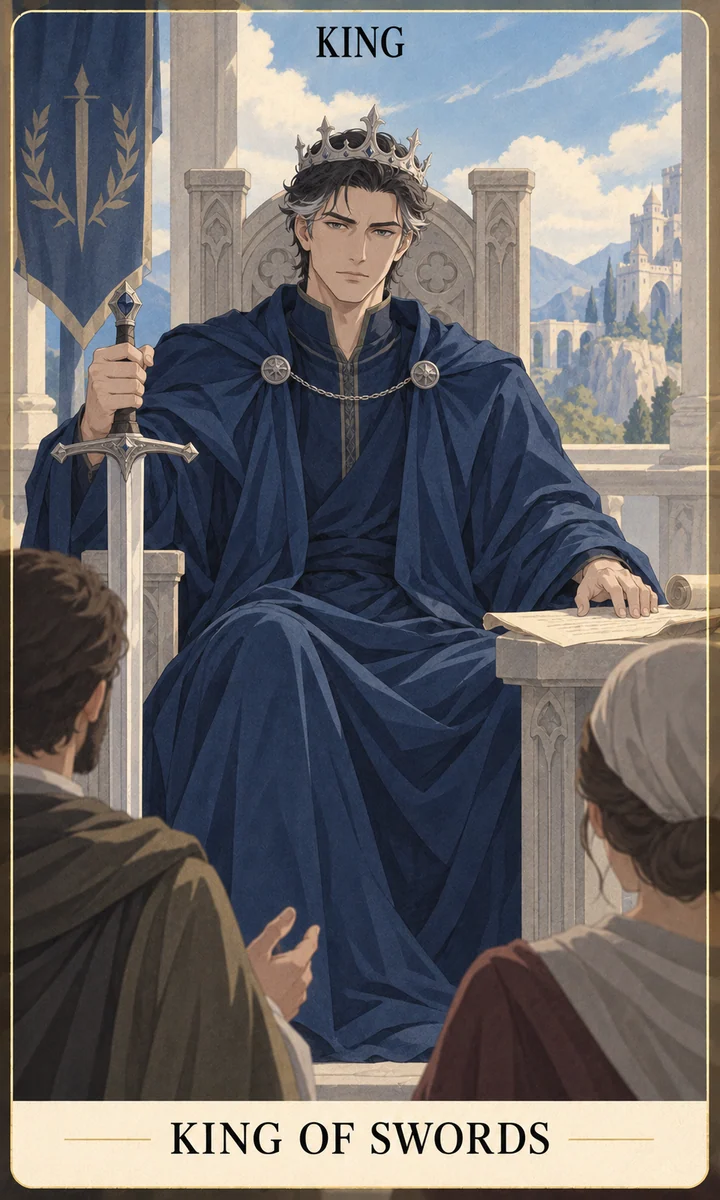
The watercolor adds a person making their case and documents beside the King, giving his judgment real information to weigh. He holds the sword while facing someone who is speaking. His steady posture conveys authority, and the conversation ties that authority to listening and evidence.
King of Swords in love and relationships
In love, the King of Swords points to intellectual respect, clear agreements and taking responsibility; reserved feelings can still be serious when they stay fair and responsive.
King of Swords as feelings
Upright · They may value the way you think and want to weigh your compatibility carefully. Their interest shows through clear intentions, agreements they keep and practical help with problems.
Reversed · They may keep judging you from a distance, or let only their own standards count in the relationship. Notice whether your experience is heard and whether your needs can change a decision.
Where the relationship stands
Upright · Boundaries and responsibilities can be talked through, and both of you follow through consistently.
Reversed · One person may set rules while making exceptions for themselves, or emotional conversations may turn into contests over who’s right. Check whether the same standard applies to both of you, and whether a disagreement can actually change an arrangement.
Where it’s heading
Upright · Clear intentions make it possible to talk about long-term plans and how to share responsibilities.
Reversed · Ongoing control leaves less and less room for closeness. A fairer relationship starts with admitting the imbalance of power and making decisions together again. Judge how serious someone is by the choices they make and the responsibilities they take on, not by a calm or authoritative tone alone.
King of Swords career meaning
At work, the King of Swords means professional judgment, clear standards and accountability; credibility comes from reasons and conduct that match.
Your approach at work
Upright · Facts and standards matter, and you can explain a firm position.
Reversed · Confidence may harden into rigidity, and disagreement may feel like a challenge to authority. The question is whether new information can still change the judgment.
Working with others
Upright · Responsibilities and evaluation criteria are clear and applied consistently.
Reversed · Rules applied selectively, or professional status used as a shield, may shut out objections that matter. Cooperation depends on transparent standards and a way for the people affected to raise facts.
Where your career is heading
Upright · Accurate decisions, and owning the responsibility that comes with them, build professional trust.
Reversed · Forceful conclusions without evidence or accountability wear down cooperation. Explaining your reasoning, revising when needed and owning your decisions can make your authority credible again.
King of Swords money and finances
With money, the King of Swords means good records, clear rules and knowing who is responsible for each decision.
Pay and compensation
Upright · How pay is calculated, when it’s due and who confirms it can all be spelled out.
Reversed · One side may interpret or change the terms on its own. Compare the agreement with the records to pin down exactly where you disagree.
Who decides on spending
Upright · Shared money can follow an agreed purpose and standard.
Reversed · Someone may claim expertise to keep the people affected out of the decision. Share the reasons, and let relevant questions be asked.
Ongoing obligations
Upright · Consistent records and a clear way to revise terms reduce misunderstandings.
Reversed · Rigid terms may ignore changing circumstances or weigh more heavily on one person. Review what each person can carry, and write down the changes both of you accept.
King of Swords in a tarot spread
Your question sets the topic, and the card’s place in the spread sets its job. Here’s how the King of Swords reads in the positions people use most.
- Present situation
- Upright: a decision is being made on stated reasons, so be clear about who makes it and what supports it. Reversed: one person’s authority is settling things others have no say in.
- Feelings
- Upright: intellectual respect and restraint; look for clear intentions and consistency. Reversed: judgment from a distance, or standards that only run one way.
- Obstacle
- Upright: constant debate that stalls the decision. Reversed: double standards and rigid thinking undermine fairness.
- Advice
- Upright: as advice, the King of Swords says explain your principle, hear objections and hold both of you to the same standard. Reversed: admit what you don’t know, and share the decision instead of imposing it.
- Outcome
- Upright: a clear agreement may take shape. Reversed: look closely at the balance of power and responsibility before you accept it.
Cards to compare with the King of Swords, and a guide to reading it in a spread: Queen of Swords · Ace of Swords · King of Cups · Tarot beginner’s guide.
King of Swords tarot card FAQ
What does the King of Swords mean?
The King of Swords means clear thinking, sound judgment and principles applied fairly. He’s the authority who can make a hard call and is willing to explain it and answer for it. Upright, he favors evidence, clear agreements and standards that apply to everyone, including the person in charge.
What does the King of Swords reversed mean?
Reversed, the King of Swords means judgment has turned rigid, biased or controlling. It can look like double standards, rules that change to suit the person in power, or a refusal to hear any disagreement. It can also come from fear of being wrong. Ask whether the reasons can be questioned and whether the rules apply fairly to everyone.
What does the King of Swords mean as feelings?
As feelings, the King of Swords means the person respects how you think and is seriously considering whether you’re compatible. They may not express much emotion, but their interest shows in clear intentions, agreements they keep and the way they respond to your needs. Look at what they do and commit to, not just how warm they sound.
Is the King of Swords cold in love?
Not necessarily. The King of Swords can be reserved and still reliable and respectful. If feelings can be discussed and your needs actually shape decisions, his clarity supports closeness. If emotions keep getting dismissed or argued away, though, that points to an imbalance in the relationship that needs attention.
What does the King of Swords reversed mean in love?
Reversed in love, the King of Swords means one person controls how every issue is defined, while the other’s experience gets dismissed. Arguments become contests over who’s right, and rules may apply to only one of you. Things improve only when both people have room to speak and agreements are made together, not handed down.
Who is the King of Swords as a person?
As a person, the King of Swords is someone analytical, principled and decisive, often in a position where others rely on their judgment, such as a manager, lawyer or advisor. The card can describe anyone, of any gender. At his best, he explains his reasons and takes responsibility; at his worst, he uses his authority to shut others down.