
What does the Six of Swords mean in tarot?
The Six of Swords is a deliberate departure from conflict, sadness or exhaustion toward somewhere calmer and easier to manage. The swords in the boat show that the causes of your distress don’t vanish overnight: you’re leaving the turmoil behind while carrying the memories and consequences with you. It is a card of recovery, sensible self-protection and steady progress toward safer ground.
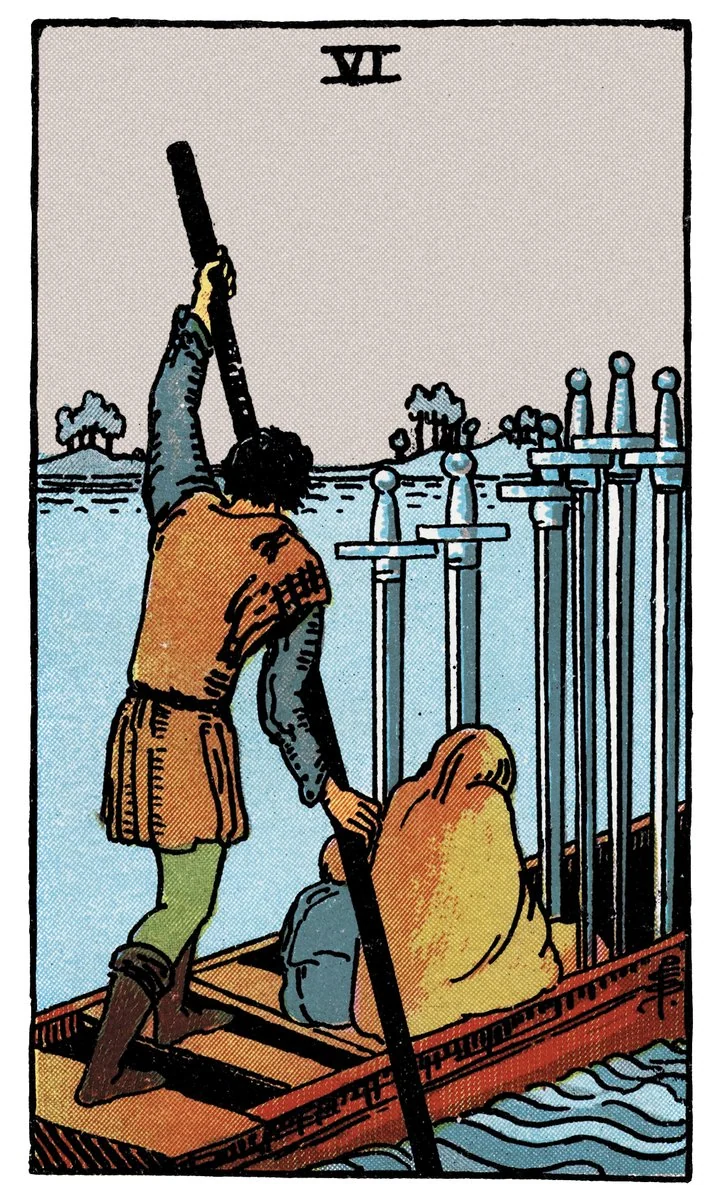
In the Rider–Waite–Smith card, a ferryman poles a small boat from rippled water toward a calm far shore. A cloaked figure and a child sit huddled beside six upright swords set in the boat. The journey depends on quiet endurance, careful steering and practical help. Healing starts with putting physical and mental distance between you and the trouble, even though making peace with the past takes longer.
- Upright keywords
- transition, moving on, leaving trouble behind, calmer waters, recovery, accepting help
- Reversed keywords
- a stalled transition, unfinished business, old patterns returning, resisting change, being pulled back, practical delays
- Transition: from rough water to smooth
The boat moves from troubled, rippled water onto a still, glassy surface. That shift mirrors moving out of crisis mode into gradual recovery. It doesn’t promise luxury, but it does offer less friction, safety from immediate danger and the mental room to steady yourself.
- Help: the ferryman’s steady pole
The ferryman moves the boat with an ordinary wooden pole, so getting across difficult water takes practical skill and steady effort, not magic. When a long conflict has drained you, accepting help from a professional, a trusted friend or a solid system is often essential.
- Baggage: the swords in the boat
The six swords stand in the boat, carried along with the passengers instead of being tossed overboard. Unresolved experiences, painful realizations and past mistakes come with you until you can properly unpack them. Leaving a bad situation doesn’t erase its history, but it gives you a safer place to work through it.
Six of Swords upright and reversed meaning
Six of Swords upright meaning
Upright, the Six of Swords means moving on: you’re leaving a turbulent situation behind and making steady progress toward calmer, more settled conditions.
A necessary crossing
You can step away from an active conflict, an unworkable environment or long-running emotional strain. Outside help, from an adviser, a colleague or a practical service, makes the move possible. Accept the guidance on offer and focus on reaching stable ground rather than settling every old dispute right now.
Room to recover
You see that staying in an ongoing battle won’t resolve anything. Choosing quiet distance over another confrontation gives your mind room to settle. Acknowledge your tiredness and sadness, but don’t let them stop you from taking the sensible steps that improve your situation.
Six of Swords reversed meaning
Reversed, the Six of Swords usually means the move toward calm has stalled, held up by practical obstacles, lingering attachments or turmoil that hasn’t been dealt with.
A crossing interrupted
Your attempt to move on gets interrupted by unfinished paperwork, emotional ties or the same old friction. You may get pulled back into past arguments, or find that a new address didn’t solve the real problem. Check that the practical conditions for leaving are really in place before you go.
Holding on too tightly
Reluctance to accept change can keep you anchored to old distress. Turning down help or dwelling on how unfairly you were treated blocks real relief. Ask yourself honestly whether you truly can’t leave, or whether you’re reluctant to let go of familiar grievances.
Is the Six of Swords a yes or no card?
Yes. The Six of Swords is a yes, especially for questions about moving, leaving a conflict behind or getting help to reach calmer ground. It describes steady progress rather than a quick win, so expect the yes to unfold gradually. Reversed, it leans toward not yet: sort out what’s holding you back before you push the change.
Six of Swords symbolism
A boat crosses from rough water to smooth, balancing heavy blades against the quiet work of steering.
- The upright swords
Six swords stand upright together in the boat.
The swords stand for mental burdens, painful memories and the unresolved fallout of past conflict. Because they ride in the boat rather than being thrown overboard, the travelers haven’t simply forgotten their history. Standing upright, the swords also form a kind of screen around the passengers, but they are still heavy cargo that has to be balanced carefully on the way across.
- The ferryman
A tall figure stands at the back of the boat, pushing it along with a long pole.
The ferryman supplies the skill and direction the journey needs. He stands for outside help, professional guidance or steady mental effort. The passengers don’t steer, which suggests that getting through a hard passage often depends on accepting capable help, structure or someone else’s steady hand when your own strength is low.
- Rough water and smooth
Choppy water runs along the right side of the boat, while smooth water lies ahead on the left.
The contrast defines the crossing. The rough water beside and behind the boat reflects upset and past conflict; the calm stretch ahead is a growing quiet with less friction. Progress means moving steadily away from the disturbance, even before you’ve reached the far shore.
- The huddled passengers
A cloaked figure and a child sit low in the front of the boat.
The hooded cloak hides identity and keeps the figures low, suggesting fatigue, grief and a need for shelter. They are saving their energy after a hard trial. Sitting quietly among the blades, they accept that the trip will be slow, a reminder that recovery means getting through a vulnerable stretch without expecting instant happiness.
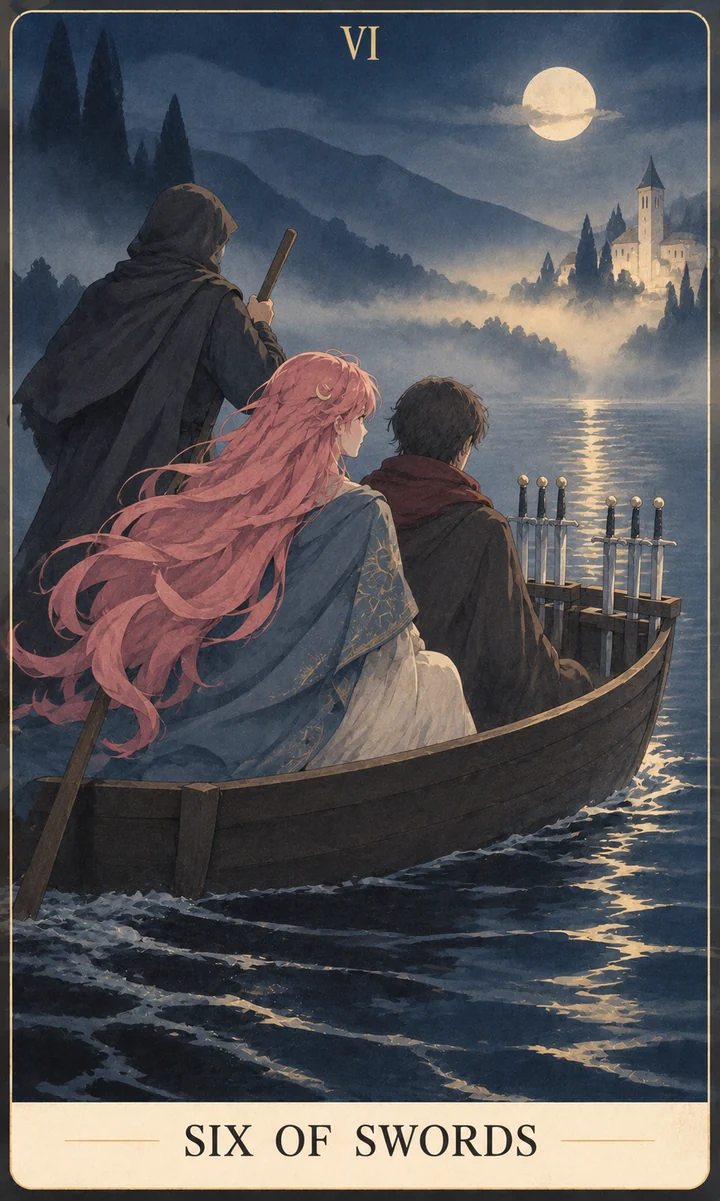
Watercolor deck
Three travelers cross dark water under a night sky, guided by a castle glowing in the distance. The swords in the bow show that they bring their burdens with them, while the lit building on the horizon promises an established refuge ahead.
Six of Swords in love and relationships
In love, the Six of Swords means moving from tension toward calmer ground, though unresolved patterns can still pull you back.
Six of Swords as feelings
Upright · They want relief, quiet and an end to the recurring arguments. They’re tired of tension and want a calmer, kinder atmosphere between you.
Reversed · They may not be ready to let old slights go, may keep rehashing past grievances, or may use withdrawal to avoid real closeness. Notice whether their silence helps you both recover or hides simmering hostility.
Moving past a hard stretch
Upright · You’re deliberately moving past a recent crisis, a near-breakup or a stretch of serious misunderstanding. You give each other space to calm down, often leaning on routines or shared compromises to rebuild trust.
Reversed · You’re caught in a loop where past betrayals or unresolved disagreements keep derailing attempts at peace. Check whether promises to move on come with real changes in behavior.
Where it’s heading
Upright · Things are trending toward emotional stability, through a peaceful reconciliation or a dignified, mutual separation. Either way, there’s less conflict and a clearer view.
Reversed · Expect lingering turbulence, sudden flare-ups of old mistrust or trouble completing a necessary parting. Lasting peace means dealing with the underlying issues, not just carrying them along in the boat.
Six of Swords career meaning
At work, the Six of Swords means leaving a toxic situation behind, moving into a better role and building stability.
Getting through it
Upright · You take a practical approach, focusing on getting through a hard assignment or planning a sensible exit from a dead-end environment. You save your energy for work that matters, not office drama.
Reversed · Frustration turns into constant complaining, or feeling trapped leads you to check out. Ask whether your dissatisfaction is turning into a real exit plan or just aimless resignation.
Smoother teamwork
Upright · Cooperation improves as people agree on neutral, workable procedures to get past old friction. Outside advisers, project managers or transfer options give you clear routes forward.
Reversed · Communication breakdowns stall projects, handovers fail or rivalries flare up during restructuring. Make sure working agreements are written down and that everyone sticks to them.
Where your work is heading
Upright · Your career is moving steadily out of a turbulent phase toward a more orderly role, a quieter workplace or a healthier team. The change may be slow, but the relief is real.
Reversed · Efforts to change jobs or departments hit administrative roadblocks, or an old problem follows you into the new position. Confirm that the contract terms and job description are truly settled before you move.
Six of Swords money and finances
With money, the Six of Swords means moving past a tight stretch by cutting costs and steadying your cash flow with careful management.
Steadier income
Upright · Cash flow settles after a period of debt, unexpected losses or interrupted income. Earnings may not jump right away, but predictable payments let you recover gradually.
Reversed · Income stays unpredictable, past money mistakes keep draining current funds or expected settlements get held up by red tape.
Paying for the move
Upright · Money goes toward necessary changes, like moving, retraining or legal fees to close out an old obligation. These are practical investments in future stability.
Reversed · Costs spiral because of a botched transition, repeated moving costs or penalties from earlier mismanagement that keep coming back.
Toward calmer water
Upright · Methodical budgeting steers your accounts toward calmer, more predictable water. You accept a modest lifestyle for a while to get back to safety.
Reversed · Refusing to cut expenses that no longer make sense, or denying the reality of your situation, keeps money stress alive. Check your budget against what you truly need.
Six of Swords in a tarot spread
Where the Six of Swords lands in a spread changes what it describes. Here is how it usually reads in five common positions, upright and reversed.
- Present situation
- Upright: you’re moving away from a hard situation toward calmer ground, with practical help. Reversed: the move has stalled, or old trouble keeps following you.
- Feelings
- Upright: they’re tired of conflict and want relief, quiet and space to recover. Reversed: they may still be holding on to old hurts, or using distance to avoid closeness.
- Obstacle
- Upright: the unresolved history you carry with you, even as you move on. Reversed: lingering attachments, old grievances or practical delays keep you from leaving.
- Advice
- Upright: as advice, the Six of Swords says accept the help on offer, stop engaging in pointless arguments and keep moving toward safer ground. Reversed: deal with what’s holding you back before you try to leave.
- Outcome
- Upright: things settle into more order and peace, as long as you don’t turn back toward the old fight. Reversed: the transition takes longer until the unfinished business is handled.
To read the Six of Swords alongside other cards, see Eight of Cups · Six of Cups · Temperance · Tarot beginner’s guide.
Six of Swords tarot card FAQ
What does the Six of Swords mean?
The Six of Swords means a transition from turmoil toward a calmer, more orderly stretch of life. You’re moving away from stress with the help of guidance or good planning. Your past burdens come with you, but your surroundings become much easier to manage.
What does the Six of Swords reversed mean?
Reversed, the Six of Swords means a needed transition is stalled, resisted or complicated by unfinished business. You may get dragged back into old arguments, or practical obstacles may delay your exit from a hard situation. Moving on gets easier once those loose ends are dealt with.
What does the Six of Swords mean as feelings?
As feelings, the Six of Swords means emotional exhaustion and a strong wish for peace and quiet. The person wants to stop fighting and is looking for relief rather than passionate confrontation or instant joy. Reversed, they may still be stuck on old grievances and not ready to let them rest.
What does the Six of Swords mean in love?
In love, the Six of Swords upright means healing after conflict, moving on from past hurt or taking deliberate steps to bring calm back to the relationship. Reversed, it warns of rehashing old grievances, avoiding needed closure or staying stuck in a pattern that doesn’t work.
Does the Six of Swords reversed mean running away from problems?
Sometimes. The Six of Swords reversed can mean trying to escape outside pressure without dealing with the causes inside you, so the problem repeats in a new setting. It can also mean conditions don’t yet allow a clean departure, and you need more practical preparation before you move.
Does the Six of Swords mean travel?
It can. The Six of Swords shows a journey across water, and Waite listed a journey by water among its meanings, so many readers link it with travel, moving or relocating. Its deeper meaning is the transition itself: leaving turmoil behind for calmer conditions, whether or not you physically go anywhere.