What does the Four of Swords mean in tarot?
The Four of Swords is a deliberate pause. Swords are about thought, speech, analysis and argument, and after the conflict and hurt earlier in the suit, this card sets aside a protected space where the fighting stops. Not acting here isn’t defeat or giving up. It keeps your judgment from being worn down by exhaustion.
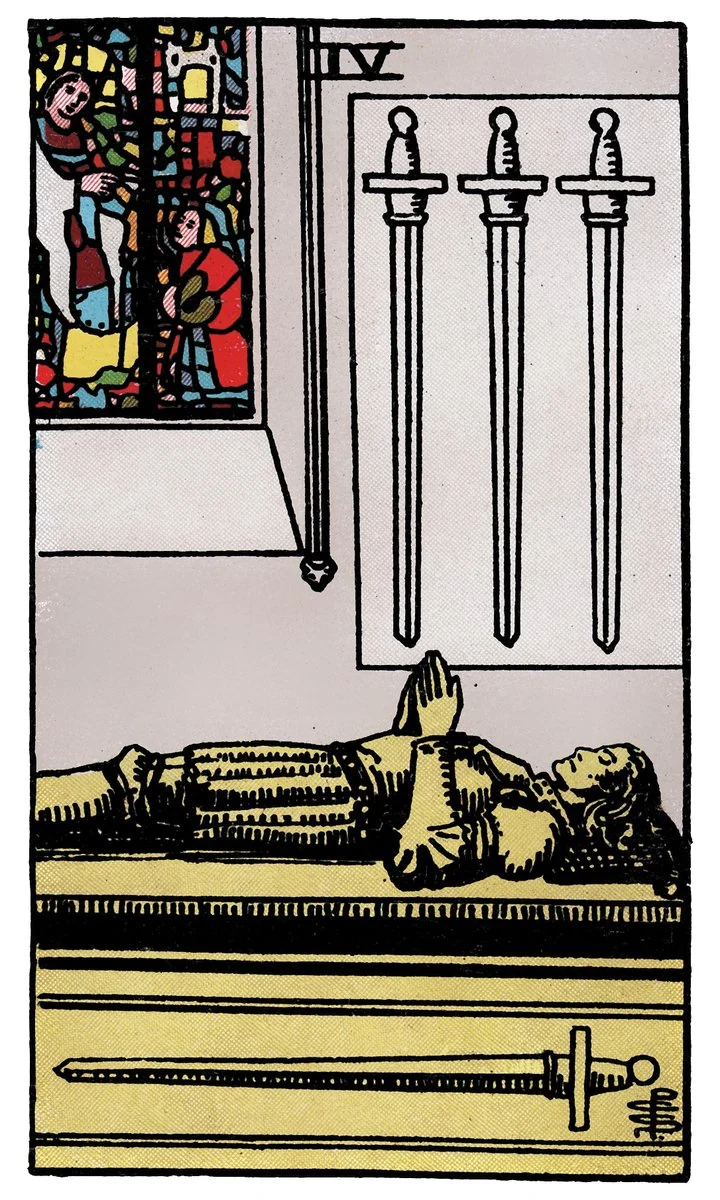
In the Rider–Waite–Smith card, the stone effigy of a knight lies on a tomb inside a quiet church, hands joined in prayer. Three swords hang on the wall above him and a fourth lies along the tomb. The image means sanctuary and solemn rest, not death. Stepping away from outside friction gives your mind room to absorb what happened before anything new begins.
- Upright keywords
- rest, recovery, a needed pause, solitude, quiet reflection, stepping back from conflict
- Reversed keywords
- burnout, pushing on while exhausted, returning after a break, re-engaging, rest cut short, silence turning into avoidance
- Sanctuary: the church and the effigy
The church and the stone figure take the knight completely out of the noise of public conflict. A quiet, sacred space sets boundaries that keep interruptions out. The tomb isn’t about literal death; it marks a protected space around rest. Pausing is treated as a necessary part of any struggle, giving your judgment time to recover away from pressure.
- Setting it aside: the swords on the wall
The three swords on the wall show analysis, disputes and old wounds hung up out of reach. Instead of swinging a blade while tired, the mind puts its arguments away for now. Some problems don’t get solved by more debate. They get clearer once the emotional and mental stirring settles.
- In reserve: the sword along the tomb
The fourth sword lies beside the figure, close at hand but not drawn. Rest doesn’t mean helplessness or switching off your judgment. Your discernment and boundaries stay intact, waiting until your energy and the circumstances make action useful again.
Four of Swords upright and reversed meaning
Four of Swords upright meaning
Upright, the Four of Swords means rest and recovery: stepping back on purpose protects your mind, restores your energy and keeps you from reacting badly.
Stepping back from the fight
An argument, a demanding project or a fast-moving situation benefits from a deliberate pause. Not reacting right away keeps things from escalating. Time away lets you see what is really happening instead of responding from tiredness or impulse. Be clear about the boundaries that protect this quiet stretch, like not answering work email on your day off.
Room to think again
You know that clear thinking needs rest. Time alone, steady sleep or quiet reflection helps clear the overload. Treat tiredness as information, not a personal failing, and let your perspective settle before you take on the next commitment.
Four of Swords reversed meaning
Reversed, the Four of Swords usually means one of two things: you’re ready to return after a period of rest, or you’re pushing on even though you’re mentally drained.
Pushing on without recovering
When rest is skipped or cut short, you may try to handle complicated issues while exhausted. Watch for irritability, arguments that go in circles and slipping concentration. Forcing work or a hard conversation before you’re steady again often drags out the tension and leads to avoidable mistakes.
Coming back after a real rest
A period of recovery or chosen quiet may be coming to its natural end. With your perspective and composure back, you can re-engage steadily. Check that your physical and mental energy really supports action, rather than jumping back in out of guilt or anxiety.
Is the Four of Swords a yes or no card?
Maybe. The Four of Swords is a maybe that means “not yet”: rest and regroup before you act. If your question is about taking time off, pausing an argument or postponing a decision, it’s a clear yes. Reversed, it can mean you’re ready to move again, but only if your energy has actually come back.
Four of Swords symbolism
A quiet indoor setting and swords hung out of reach show that a still mind needs firm boundaries against outside arguments.
- The knight at rest
A carved knight lies flat on a stone tomb, hands joined in prayer.
The effigy shows combat set aside. Showing the warrior at complete rest, not on horseback or in battle, removes all physical tension from the scene. The praying hands suggest concentration, contemplation or quiet resolve rather than outward effort. Putting weapons down is a choice here, not a loss of strength.
- Three swords on the wall
Three swords hang on the wall above him, points down.
These swords recall recent disputes, worries or distress, like the heartbreak of the card before. Hanging them up means the conflicts are acknowledged but put on hold. Their fixed position shows that arguments and pressing problems can be set aside safely without needing an answer right now.
- The sword along the tomb
A single sword lies flat along the side of the tomb.
Unlike the three on the wall, this sword stays close at hand, lying down rather than raised. It stands for discernment kept in reserve. The mind keeps its ability to defend itself, but it holds back until action becomes useful and grounded.
- The stained-glass window
A bright stained-glass window in the church shows a holy figure and an inscription.
The window marks a sheltered space, away from weather, street noise and public turmoil. Its religious imagery connects rest with spiritual, moral or philosophical reflection. Its soft, filtered light suggests that stepping back can give you insight that noisy everyday debate tends to drown out.
Watercolor deck
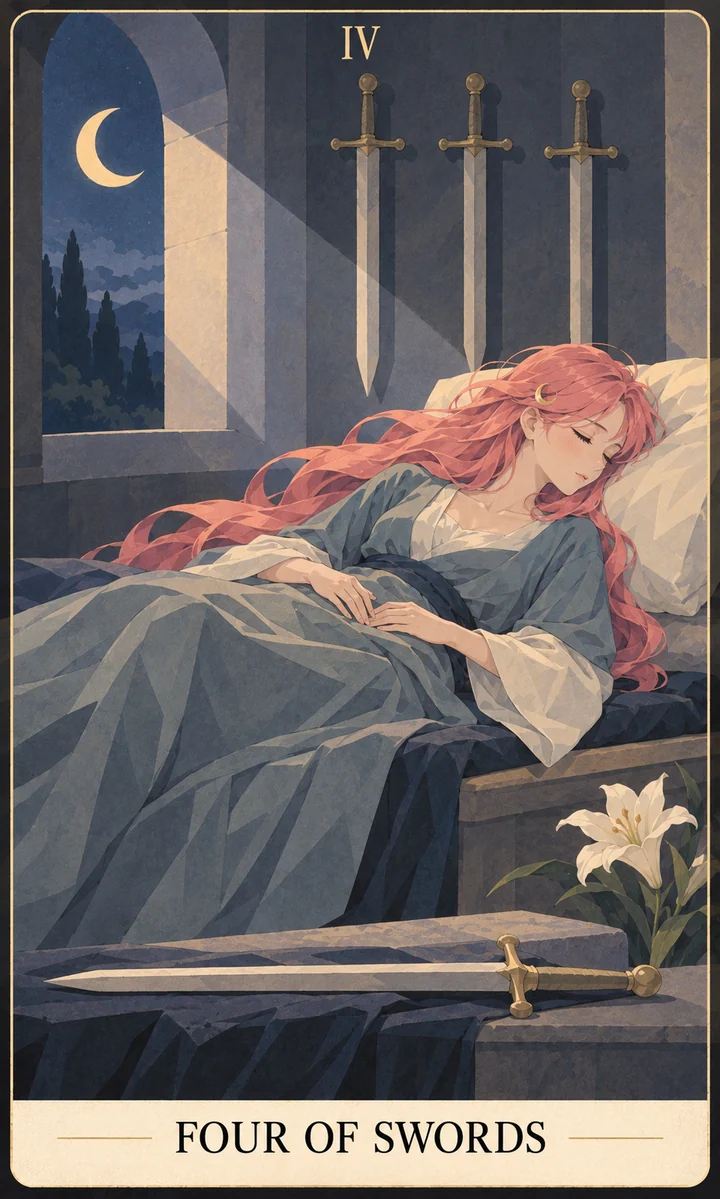
The watercolor shows a figure lying on their side on a bed in a calm, homely room. Three swords hang safely on the wall and a single blade rests against the bedside. Through a nearby window, a slim crescent moon shines in the night sky, and pale white blossoms in the room add to the sense of gentle recovery and undisturbed sleep.
Four of Swords in love and relationships
In love, the Four of Swords means the relationship may need a pause to cool down, as long as the break doesn’t turn into avoiding the real issue.
Four of Swords as feelings
Upright · They want quiet, personal space and a break from emotional intensity. They can care about you deeply and still need time alone to recover from exhaustion or outside stress.
Reversed · Their withdrawal may be burnout so deep that even normal conversation feels like too much. Or they may be ready to end a silent stretch and reach out to you again.
Taking a break together
Upright · An agreed pause helps, giving you both room to think without pressure to solve every disagreement now. Silence works when you both understand what it’s for.
Reversed · A long silence can turn into avoidance and freeze communication instead of healing it. Or you may both see that the distance has done its job and start talking openly again.
Where it’s heading
Upright · A cooling-off period helps prevent a breakup made in the heat of the moment and restores perspective before big conversations. Respecting each other’s boundaries is what moves things forward.
Reversed · Fighting while you’re both depleted does more damage. Things turn around when you both come out of the withdrawal with goodwill and a concrete plan for handling the hard topics together.
Four of Swords career meaning
At work, the Four of Swords means progress depends on managing your mental load, resting on purpose and knowing when to step back in.
Stepping back at work
Upright · Your involvement is minimal on purpose, or focused on thinking things through rather than front-line work. Stepping back lets you look at long-term strategy without the daily noise.
Reversed · You may be pushing through obvious mental fatigue and missing important details. Or you may be getting ready to take on demanding work again after a much-needed leave.
Calling a recess
Upright · Negotiations or heated debates at work benefit from a scheduled break. Pausing the back-and-forth gives everyone room to review the facts calmly.
Reversed · Putting off communication can create bottlenecks and missed deadlines. Once people say they’re ready to resume, stalled teamwork can restart with new momentum and clearer terms.
Where your work is heading
Upright · Rest, leave or a strategic step back sets you up for sustainable work in the next phase. Rushing results now would hurt the quality.
Reversed · Staying passive too long loses momentum, and rushing recklessly leads to burnout you could have avoided. Ask whether your energy and your project’s resources are truly ready for sustained effort.
Four of Swords money and finances
With money, the Four of Swords means pausing impulsive spending, reviewing what you owe and letting your finances settle.
Steady, not growing
Upright · Income stays steady but flat, and expansion is on hold while you consolidate.
Reversed · Exhaustion may tempt you into hasty financial risks to force growth. Or a pause in incoming money may finally end as business picks up again.
A spending freeze
Upright · You cut back with a deliberate pause on nonessential purchases to conserve what you have.
Reversed · Stress spending can quietly drain your savings, while a clear budget marks a disciplined end to the belt-tightening.
Keeping things safe
Upright · Keeping money in safe, easy-to-reach places gives you peace of mind against ups and downs.
Reversed · Avoiding your accounts out of fear can turn into neglect. Reviewing them calmly lets you make practical, steadying adjustments.
Four of Swords in a tarot spread
Where the Four of Swords lands in a spread changes what it describes. Here is how it usually reads in five common positions, upright and reversed.
- Present situation
- Upright: a natural pause has arrived, and stepping back from pressure comes before any next move. Reversed: the break is ending, or you’re pushing on without having rested.
- Feelings
- Upright: they want solitude, quiet and relief from constant demands or emotional conflict. Reversed: they may be burned out, or ready to reconnect after time apart.
- Obstacle
- Upright: withdrawing so far into isolation that the problem never gets dealt with. Reversed: refusing to take the rest you clearly need.
- Advice
- Upright: as advice, the Four of Swords says put arguments and negotiations on hold for now, and give yourself time and space to get your perspective back. Reversed: check that you’re truly rested before you step back in.
- Outcome
- Upright: a quiet interval brings mental clarity. Reversed: a return to activity, which goes well only if you’re ready to re-enter the field.
To read the Four of Swords alongside other cards, see Three of Swords · Nine of Wands · The Hermit · Tarot beginner’s guide.
Four of Swords tarot card FAQ
What does the Four of Swords mean?
The Four of Swords means rest, sanctuary and mental recovery. It suggests stepping away from conflict or an overwhelming workload so you can think clearly again. Pulling back for a while means your next decisions come from a rested, grounded mind rather than from exhaustion.
What does the Four of Swords reversed mean?
Reversed, the Four of Swords means either coming out of rest to take on responsibilities again, or pushing forward despite burnout. Which one it is depends on whether your mental energy has really returned, or whether you’re ignoring your tiredness out of habit.
What does the Four of Swords mean as feelings?
As feelings, the Four of Swords means someone needs space, quiet and a break from emotional intensity. They’re overwhelmed and need time alone to sort through their thoughts. It doesn’t automatically mean they’ve lost interest; it means they have less to give until they’ve rested.
What does the Four of Swords mean in love?
In love, the Four of Swords often points to a helpful pause or cooling-off period after arguments or intense emotions. A deliberate step back prevents reactions you’d regret and lets you both come back to the relationship with calmer minds and clearer words.
Does the Four of Swords reversed mean a relationship is ending?
No, the Four of Swords reversed doesn’t mean a breakup by itself. It often marks the end of a silent period or time apart, when communication starts again. If the exhaustion behind the silence hasn’t been dealt with, though, forcing conversations too early can bring fresh friction instead of real repair.
Does the Four of Swords mean death?
No. The Four of Swords shows a stone effigy on a tomb, but the card is about rest, not death. The figure is a picture of sanctuary: a protected place to recover after conflict. In a reading, it points to sleep, time off or a deliberate pause before you take up the next challenge.