What does the Knight of Swords mean in tarot?
The Knight of Swords is about fast action driven by a clear aim. The urge to clear something up, go after something or settle it comes first, and there’s very little gap between deciding and moving.
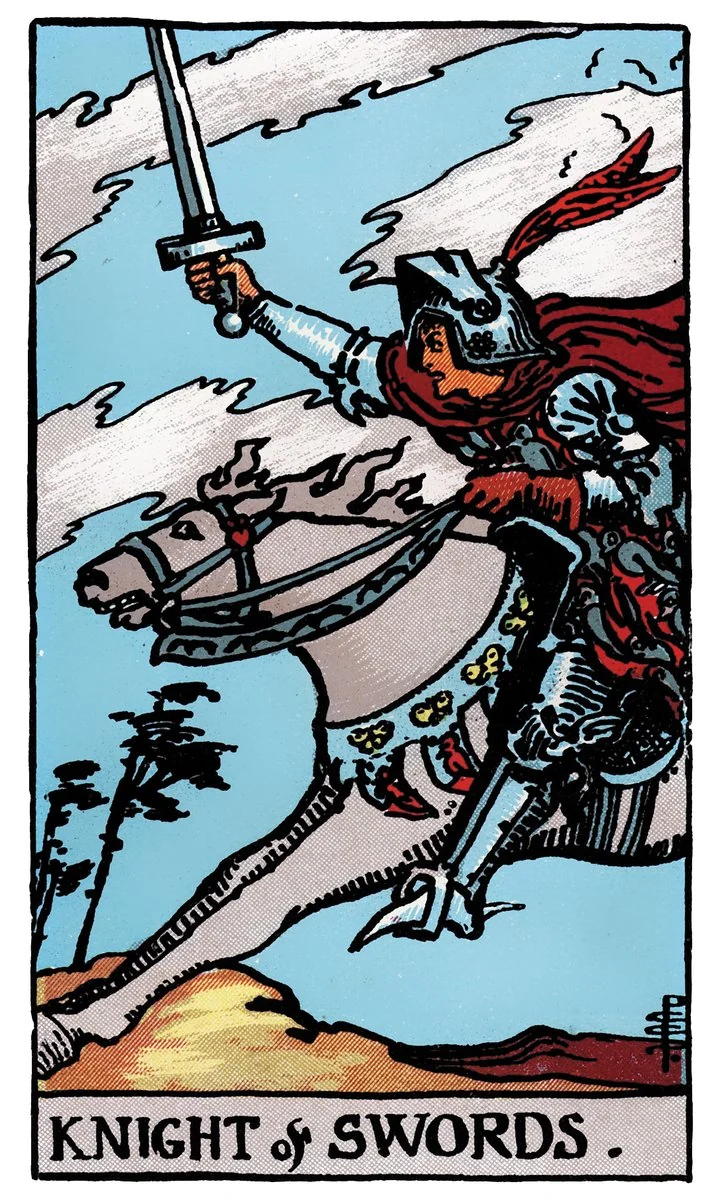
In the classic image, rider, sword and horse surge forward together while the trees bend in the wind. That focus gives the movement its force, but whatever else is going on around the rider can drop out of view. Anyone can take on this court card’s approach for a particular task or stage of a relationship.
- Upright keywords
- decisive action, speed, directness, focused ambition, drive, standing up for a conviction
- Reversed keywords
- rushing, impulsive decisions, harsh words, pressure, scattered goals, burnout after a rush
- Decisiveness
The rider picks a direction and goes. That can break through procrastination and drag an avoided question into the open. Ask whether you have enough information for the move, and whether feedback is still allowed to change its course.
- Directness
A clear position can defend an important need or push for an answer. Reversed, the same force can steamroll a conversation. Stay with the issue you’re trying to resolve, and let the other person finish their answer.
- Pace
The rider keeps going despite the resistance. Focus helps you get things done, but it also narrows what you notice about cost and timing. At a sensible checkpoint, ask whether the direction is still useful and whether the people involved understand it.
Knight of Swords upright and reversed meaning
Knight of Swords upright meaning
Upright, the Knight of Swords means a clear goal is turning into action, and direct communication is cutting through delay.
Taking on the issue
Someone is ready to reach out, state a position or push a decision into the open. Name the issue, and make sure both of you have the relevant information before you speed up.
Focused intention
You’re ready to stop waiting and make your position known. Check that the goal still serves what you need, and stay open to information that could change it.
Knight of Swords reversed meaning
Reversed, the Knight of Swords usually means urgency is outrunning judgment, so quick movement turns into collision.
Winning instead of resolving
Interrupting, pushing for an instant answer or forcing an arrangement through may only create more resistance. Ask whether the real question has actually been answered, and take separate issues one at a time.
Restlessness and burnout
Waiting may feel unbearable, or a burst of activity may end in exhaustion. Tell a real deadline apart from urgency you’ve created yourself, and leave time to check what you still don’t know.
Is the Knight of Swords a yes or no card?
Yes. The Knight of Swords is a yes, especially when you’re asking about acting quickly on a clear goal and you have enough information to go on. His energy is fast and decisive, so the card favors speaking up, following up and making the move. Reversed, it leans toward not yet: slow down, check the facts and adjust your approach, and keep in mind that for questions about lasting stability, speed alone isn’t enough.
Knight of Swords symbolism
Rider, sword and horse all point forward while the wind keeps blowing: momentum and feedback have to be read together.
- Raised sword
The rider raises the sword toward the direction of travel.
The raised blade moves with the rider’s chosen direction, giving a conviction a target. Clear thinking has turned into pursuing or defending a position. That force supports speaking directly; reversed, conviction may get ahead of checking and push past the other person’s response.
- Forward-leaning rider
The rider leans low over the horse’s neck.
Leaning close to the horse’s neck focuses body and gaze on the goal. It cuts hesitation but narrows awareness. Part of the difference between decisiveness and haste is whether information outside the immediate goal can still get through.
- Galloping horse
The white horse stretches out at full gallop.
The horse’s outstretched legs show full speed, and its white color suggests a pure or idealistic intention. Compared with the white horse of the Knight of Cups, the difference is posture and pace: this rider is urgently chasing a conviction. Direction and information still decide what all that force accomplishes.
- Wind-bent trees
Trees bend and clouds streak across the sky in a strong wind.
Bent trees and stretched clouds make the resistance visible. Riding on at full speed shows courage, along with a tendency to ignore the conditions around you. The wind is part of the meaning: every goal sits in an environment that still has something to tell you.
Watercolor deck
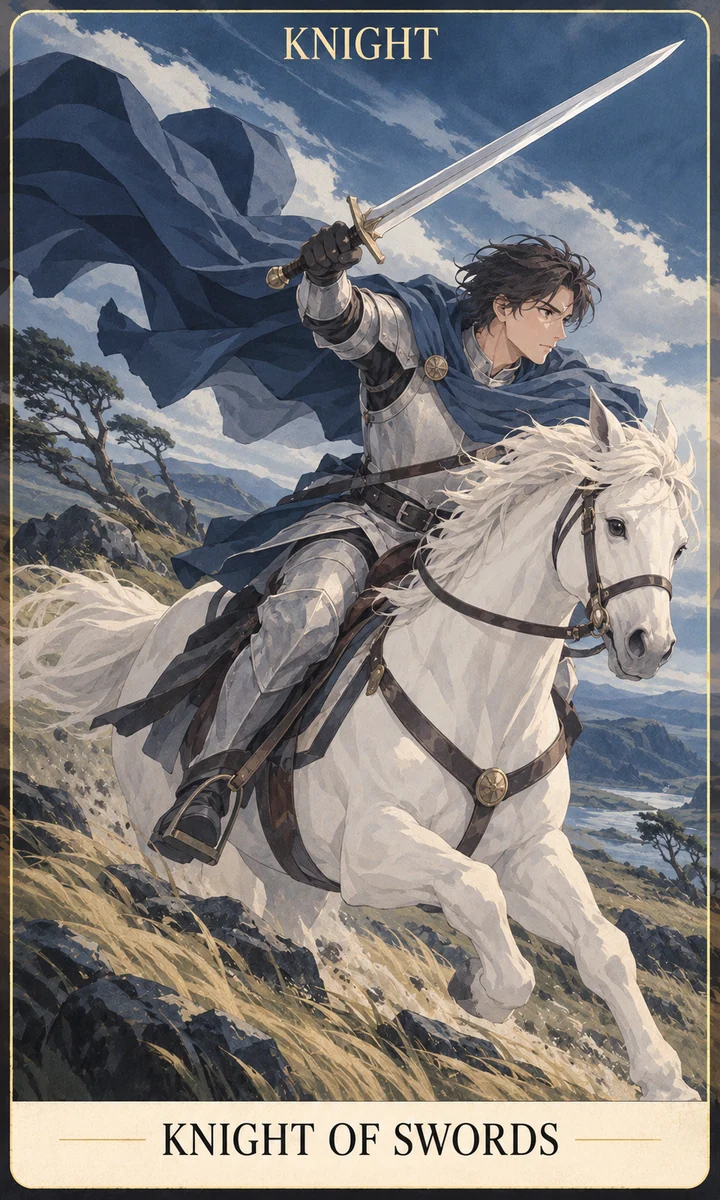
The watercolor lines up the sword, the rider’s gaze and the horse’s head, while the cloak and plants show a strong wind. With everything pointing the same way, focused will and rapid advance are especially clear. The resistance is still all around the rider, so the image holds both decisiveness and urgency in one movement.
Knight of Swords in love and relationships
In love, the Knight of Swords points to direct communication, bold moves and quick decisions; what matters is the purpose behind the speed and whether it leaves room for your response.
Knight of Swords as feelings
Upright · They may be strongly interested in you, enjoy the mental spark between you or want to settle a specific question about the relationship.
Reversed · Anxiety, anger or the need to win may be driving the contact more than curiosity about what you need. After they reach out, do they listen and talk through something you share, or just push for the answer they already decided on?
Where the relationship stands
Upright · When your paces match, both of you can raise concerns and clear up misunderstandings quickly.
Reversed · Interruptions and pressure can leave one person with no time to think, so speed gets ahead of understanding. Make sure both of you can finish speaking and agree to come back to questions that are still open.
Where it’s heading
Upright · A direct conversation or move can set what happens next, as long as both of you accept the direction.
Reversed · Continued pressure can lead to a rushed decision in the middle of a fight. Slowing down to check what each of you means can turn that energy toward a resolution. If you’re hoping to reconcile, ask whether the old issue has really been dealt with; if you’re hoping for contact, look at the practical conditions. A fast move alone doesn’t prove lasting intention.
Knight of Swords career meaning
At work, the Knight of Swords means a clear goal, direct communication and fast execution, as long as you have the right information and the team is with you.
Your approach at work
Upright · Your attention is locked on a specific issue, and you’re willing to argue for it and act.
Reversed · Urgency may arrive before a useful goal does, with impatience or shifting positions driving the activity. A real deadline and personal restlessness call for different responses.
Working with others
Upright · Direct communication and quick execution can push a clear task forward.
Reversed · Interruptions, skipped requirements or arrangements forced through make action faster than shared understanding. Whether the key facts and a common goal are in place shows whether the team can keep up.
Where your career is heading
Upright · Decisiveness can break a stalemate and produce visible progress.
Reversed · Hasty choices may lead to rework, conflict or exhaustion. If a short review gets you moving with focus again, speed is serving the work instead of creating new emergencies.
Knight of Swords money and finances
With money, the Knight of Swords asks how urgency is shaping your conversations and decisions.
Following up on payment
Upright · Direct questions can clarify payments, deliveries and progress.
Reversed · An unchecked accusation or a rushed message may make the disagreement worse. List the facts that need confirming and deal with them one by one.
Spending decisions
Upright · Clear, well-defined terms let you act efficiently.
Reversed · Fear of missing out, or wanting an uncomfortable feeling to end, can hide costs and obligations. Check the real deadline and the full terms before you commit.
Resources and pace
Upright · Clear priorities can focus your resources on the most important responsibility.
Reversed · Frequent, abrupt changes can create extra costs and unfinished work. Look at what’s driving each change, and clear up avoidable uncertainty sooner.
Knight of Swords in a tarot spread
Your question sets the topic, and the card’s place in the spread sets its job. Here’s how the Knight of Swords reads in the positions people use most.
- Present situation
- Upright: things are moving fast, so check whether everyone shares the goal and the pace. Reversed: the speed is creating friction, and people are being pushed rather than brought along.
- Feelings
- Upright: strong interest and a sense of urgency, whether from attraction or a wish to clear something up. Reversed: the urgency comes from conflict, anxiety or the need to win.
- Obstacle
- Upright: moving so fast that useful information gets left behind. Reversed: pressure and snap conclusions keep you from getting an accurate answer.
- Advice
- Upright: as advice, the Knight of Swords says ask the central question directly, and hear the full answer before you take the next step. Reversed: slow down, check the facts and adjust your approach.
- Outcome
- Upright: a quick exchange or decision may come soon. Reversed: watch whether haste is creating more conflict than it solves.
Cards to compare with the Knight of Swords, and a guide to reading it in a spread: Page of Swords · King of Swords · Knight of Wands · Tarot beginner’s guide.
Knight of Swords tarot card FAQ
What does the Knight of Swords mean?
The Knight of Swords means fast action, direct words and focused pursuit of a goal. The charging rider puts speed at the center of the card. Upright, it’s the energy that ends procrastination and gets a hard question asked. To turn that speed into real progress, you still need to listen, check the facts and make sure others can keep up.
What does the Knight of Swords reversed mean?
Reversed, the Knight of Swords means urgency is getting ahead of good judgment. It can look like impulsive decisions, harsh or combative words, goals that keep changing, or exhaustion after a rush of activity. The way back is to slow down enough to clarify the actual goal, the real deadline and what information is still missing.
What does the Knight of Swords mean as feelings?
As feelings, the Knight of Swords means strong interest, eagerness to approach you or urgency about something unresolved between you. The feelings are intense and tend to come out quickly and directly. Pay attention to what the person is trying to achieve, and whether they can accept your actual response instead of pushing for the one they want.
Does the Knight of Swords mean someone will make a move?
It can. Upright, the Knight of Swords is about initiative: reaching out directly, stating a position and acting rather than waiting. Whether that leads to romance depends on the purpose behind the move, how you respond and whether their intentions hold up after the first rush. A fast move on its own doesn’t prove lasting interest.
What does the Knight of Swords reversed mean in love?
Reversed in love, the Knight of Swords means conversations are turning into pressure, arguments or demands for an immediate decision. One person may be pushing too hard or reacting in anger. Before anything moves forward, both of you need room to speak, think and come back to the issue calmly.
Can the Knight of Swords represent a person?
Yes. The Knight of Swords often describes a person of any age or gender who is quick, outspoken, driven and impatient with delay. It can also describe your own approach or the pace of a situation, such as a fast-moving project or a conversation that’s heating up. The question you asked and the other cards show which fits.