
What does the Three of Pentacles mean in tarot?
The Three of Pentacles is about turning an idea into something real through skilled teamwork. Instead of working alone, people with different strengths come together around a plan they all agree on. Good results need both hands-on skill and a willingness to listen, so each person’s expertise serves the whole structure.
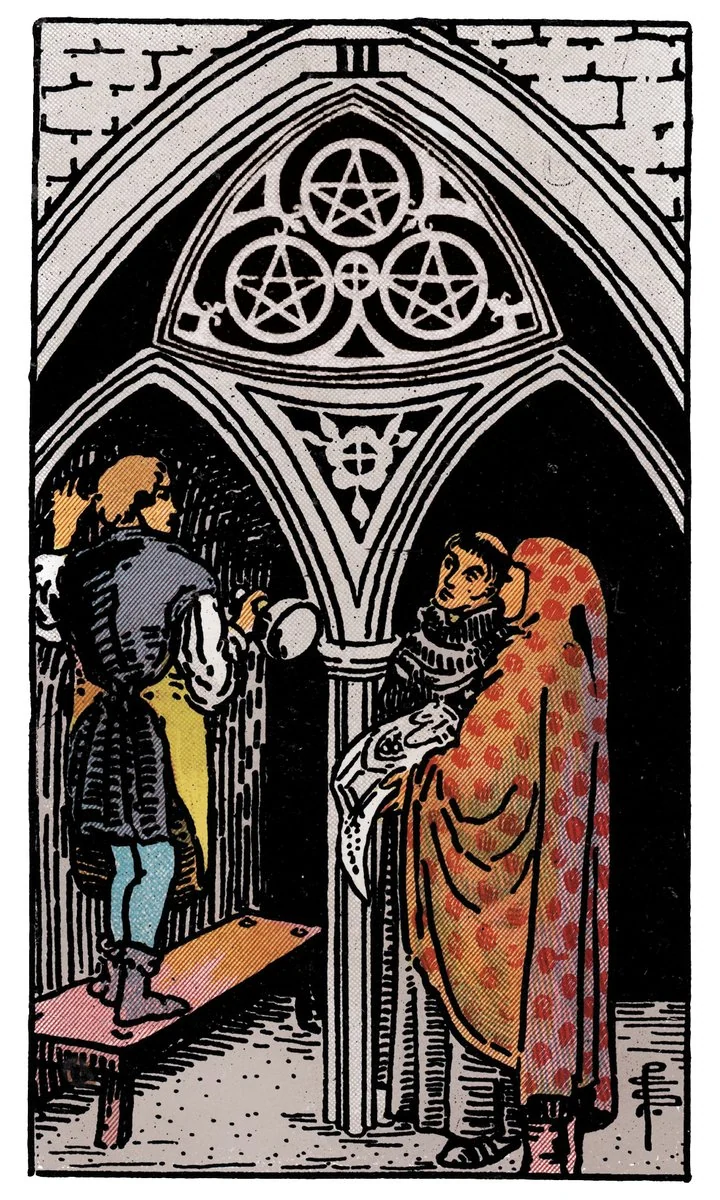
On the classic card, a stonemason stands on a bench beneath a church arch, talking with a monk and a figure holding the building plans. The scene isn’t about rank. It’s about needing each other: the design needs hands to carve it, and the craftsman benefits from a clear plan and an outside eye. The three figures are working partners, not a love triangle.
- Upright keywords
- teamwork, collaboration, skilled work, learning a craft, shared goals, recognition for good work
- Reversed keywords
- poor teamwork, unclear roles, clashing standards, unrecognized effort, sloppy results, going it alone
- Different roles, one project
The card brings together a craftsman, a planner and a patron under one stone arch. Each sees the work from a different angle, and the building needs all three. Real progress rarely happens alone. It comes from lining up different talents behind one practical goal, without anyone needing to win.
- Craft that turns plans into stone
The mason holds a mallet and chisel and is actively shaping raw stone. In the suit of Pentacles, results come from trained, deliberate work, not wishful thinking. Good craftsmanship combines discipline with care, and a vision gains real value once someone with skill builds it.
- A plan everyone can check
The plan held open between the figures sets the standard for the work. It keeps disagreements from turning into power struggles, because decisions rest on something everyone can measure. Real cooperation depends on a shared framework like this, so everyone judges progress by the same rules.
Three of Pentacles upright and reversed meaning
Three of Pentacles upright meaning
Upright, the Three of Pentacles means different skills coming together around a shared plan, with progress everyone involved can see.
Good work, built together
A shared project goes well when hands-on work and careful planning go together. People know their roles and check their work against agreed standards, so things move smoothly. Feedback improves the work instead of tearing it down, and everyone’s know-how makes the result better. Progress is visible, and the whole team can see it.
Proud of your craft, open to input
You’re ready to put your skills to work while staying open to guidance. Real confidence lets you take constructive criticism without feeling smaller. When you value your own contribution and respect what others bring, you get the satisfaction of building something lasting that you couldn’t have finished alone.
Three of Pentacles reversed meaning
Reversed, the Three of Pentacles usually means teamwork breaking down through clashing standards, poor communication or effort that goes unrecognized.
When the team isn’t on the same page
Work gets messy when people expect different things or ignore guidelines everyone needs. Jobs are rushed and come out sloppy, or they stall under micromanagement and defensiveness. Look back at whether roles were clearly assigned from the start. Without agreement on what good work looks like, frustration and wasted effort follow.
Unseen, or going it alone
You may feel your skill goes unacknowledged, or that rigid authority overrides your professional judgment. Or you might be the one turning down useful advice out of stubborn self-reliance. Ask yourself whether pulling away from the group is a needed boundary against poor leadership or a way to avoid feedback that would improve the work.
Is the Three of Pentacles a yes or no card?
Yes. The Three of Pentacles is a yes, especially for questions about teamwork, learning a skill or building something step by step. It shows good work coming together because people pool their skills around a clear plan. It’s less supportive of shortcuts, gut-feel gambles or going it alone, and reversed it leans toward not yet: sort out roles and standards before you push ahead.
Three of Pentacles symbolism
The workshop scene shows planning and hands-on labor joining to build something solid and lasting.
- The stonemason on the bench
A craftsman in a work apron stands on a wooden bench, holding a mallet and chisel.
The mason stands for technique, skill and getting the job done. The bench lifts him up to the work while the two figures below consult with him, so practical skill and planning meet as equals. His apron shows direct contact with the material: ideas become carved stone through steady, disciplined work.
- The plan
One of the figures holds open a sheet showing the building plan.
The plan is the shared benchmark for the whole project: agreed specs and a clear structure. Without it, the mason carves blind; without the mason, the drawing stays on paper. Used together, it keeps decisions grounded in standards everyone can check rather than in personal whims or competing egos.
- The church arch
A stone arch frames the figures and opens into the interior behind them.
A church is a shared building that outlasts the people who build it and depends on precise cooperation. Framing the workers inside the arch shows personal talent going into something bigger and longer-lasting, which only holds up if the groundwork is sound.
- Three pentacles in the stone
Three coins are carved into the stonework above, set in a triangle.
Built into the architecture itself, the three coins bring effort, material and design together. Their balanced arrangement suggests a stage of the work that has come together well. Value and recognition grow out of good craft, and the carving stands as lasting proof that the cooperation worked.
Watercolor deck
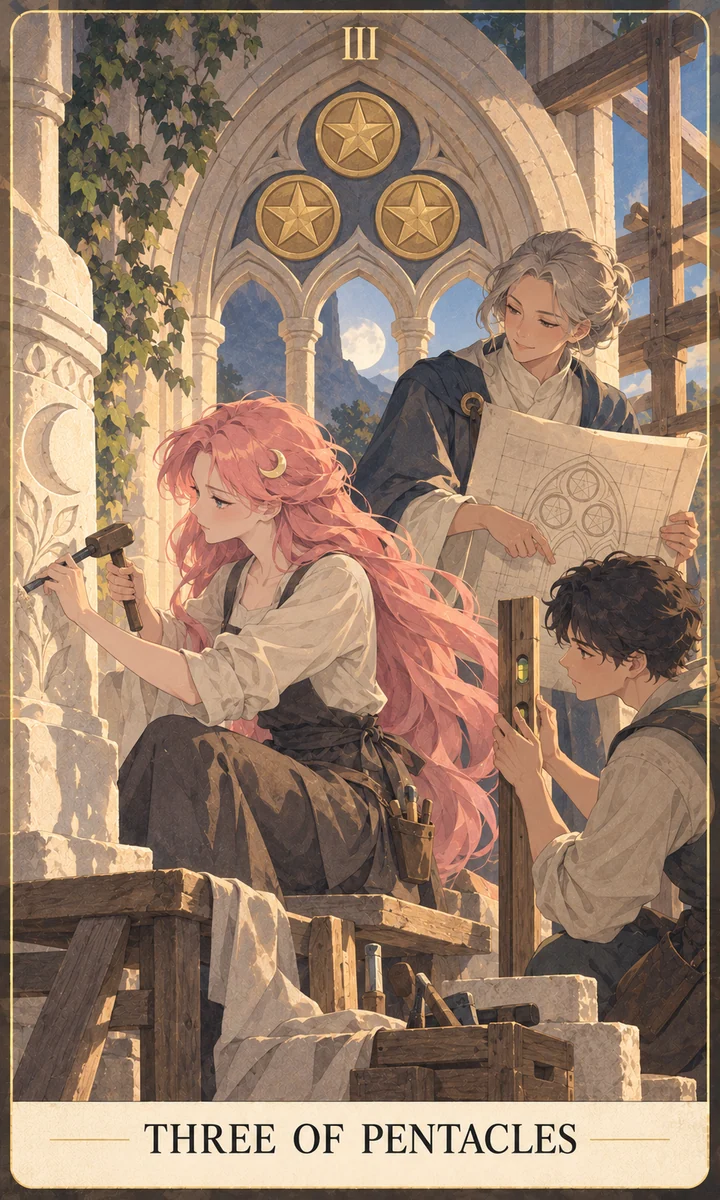
In the watercolor, three figures gather in front of an arched stone window to work on a building in progress. One works with hand tools, another checks the building plans, and a third helps out beside them. The three pentacles above the arch keep the focus on what they’re building together: something solid and meant to last.
Three of Pentacles in love and relationships
In love, the Three of Pentacles means building a relationship as a team, with shared responsibilities and real effort on both sides; the three figures don’t mean a third person.
Three of Pentacles as feelings
Upright · They see the relationship as something worth building together, with practical effort and respectful communication. They value competence, emotional maturity and the everyday business of being partners.
Reversed · Their interest may fade when real effort is needed, or you may feel judged like an employee rather than appreciated as a partner. Notice whether they want to build a fair life together or mostly want to critique your habits.
How you work as a couple
Upright · You work like a team: chores, money plans and emotional support are talked about openly and shared fairly. The three figures don’t point to a love triangle here; they reflect supportive conversation and real cooperation.
Reversed · Daily life starts to break down over an uneven split of chores, different ideas about how to live, or not consulting each other on big decisions. One partner ends up feeling overloaded and unappreciated.
Where it’s heading
Upright · A steady willingness to listen, adapt and handle practical things together strengthens your foundation over time. Clear agreements make shared life easier and more reliable.
Reversed · Carrying on without clear agreements breeds resentment and petty arguments. Moving forward means pausing to reset basic expectations, splitting everyday tasks fairly and checking that you both actually want to put work into the same future.
Three of Pentacles career meaning
At work, the Three of Pentacles means skilled teamwork, respect for expertise and projects done to an agreed standard.
Your approach to the work
Upright · You take real pride in your craft and bring a cooperative attitude. You take your work seriously and welcome feedback that improves the final result.
Reversed · Effort slides into box-ticking, nitpicky perfectionism or defensiveness about normal quality checks. The key difference is whether you hear criticism as a chance to get better or as a personal attack.
Teamwork and collaboration
Upright · Mixed teams work well because specialists, managers and clients respect what each one brings. A shared plan keeps everyone aligned.
Reversed · Communication breaks down between the people who plan and the people who build. Deadlines slip because of vague specs, jostling for credit, or managers brushing off the practical limits raised by the people doing the work.
Where your career is heading
Upright · Consistent craftsmanship and good teamwork lead to recognition, more responsibility and solid advancement. You build a reputation as someone who delivers.
Reversed · Projects can stall under mediocre standards or office friction. Progress needs clear technical criteria, clear roles and a fair way to document and evaluate good work.
Three of Pentacles money and finances
For money, the Three of Pentacles links your income to skill, teamwork and work that others can see and reward.
Getting paid for your skill
Upright · Income is tied to skill, finished work and recognition from the people you work with.
Reversed · Standards, responsibilities or pay arrangements may not line up. Having your work praised and actually getting paid for it are two separate steps.
Costs and investments
Upright · Spending supports a clearly defined piece of shared work, such as tools, training or a specialist’s time.
Reversed · Unclear requirements or poor coordination lead to redone work and extra costs. Paying for expertise makes sense when its role in the project is clear; it isn’t automatically worth it.
Building on solid skills
Upright · Skills you can use again and again, plus a team that works, give you a basis for steady income.
Reversed · Vague promises or unclear responsibilities weaken that base. The card describes how value is made and shared, not the overall state of your finances.
Three of Pentacles in a tarot spread
Where the Three of Pentacles falls in a spread changes what it describes. Here is how it usually reads in five common positions.
- Present situation
- Upright: a project or relationship needs different strengths working together to a practical, agreed standard. Reversed: roles and communication are out of sync, and the standards need to be agreed again.
- Feelings
- Upright: respect, and a wish for a partner or colleague who puts in equal effort. Reversed: feeling unheard, or worn out by all the coordination.
- Obstacle
- Upright: getting stuck on details can slow the work down. Reversed: vague roles, competing egos or ignored advice keep the work from taking shape and lead to redone work.
- Advice
- Upright: as advice, the Three of Pentacles says check the plan, ask qualified people for input and take pride in doing your part well. Reversed: stop rushing, and agree on who is responsible for what before you go further.
- Outcome
- Upright: steady cooperation produces a respected, lasting result. Reversed: if standards never get aligned, the work may have to be scrapped or may stall.
Read the Three of Pentacles alongside related cards and guides: Eight of Pentacles · Three of Cups · The Hierophant · Tarot beginner’s guide.
Three of Pentacles tarot card FAQ
What does the Three of Pentacles mean?
The Three of Pentacles means skilled teamwork, good advice and building something of real value. It shows people in different roles combining hands-on work with careful planning to reach a shared goal. The card’s message is that quality work needs both expertise and a willingness to work to standards that others can check.
What does the Three of Pentacles reversed mean?
The Three of Pentacles reversed means friction on a team, mismatched expectations or slipping quality. Work suffers when people pull in different directions, ignore the plan or stop communicating. It can also mean your skill isn’t being recognized, or that someone, maybe you, is resisting feedback the work actually needs.
What does the Three of Pentacles mean as feelings?
As feelings, the Three of Pentacles shows respect for your competence, reliability and willingness to work together. Their interest is practical and grounded: they care about how the two of you function day to day. They value shared effort and are willing to deal with real-life logistics rather than a fantasy.
What does the Three of Pentacles mean in love?
In love, the Three of Pentacles means building a stable, supportive partnership through shared work and clear communication. You coordinate chores, money goals and long-term plans well together. It’s the satisfying feeling of being real teammates who respect each other’s input and both pull their weight.
Does the Three of Pentacles mean a third person or cheating?
No. The three figures stand for different working roles, such as craft, planning and the person commissioning the work, not a love triangle. Reversed in a love reading, the card usually points to poor teamwork, an unfair split of chores or feeling unappreciated by your partner. It isn’t an automatic sign of infidelity.
What does the Three of Pentacles mean for your career?
For your career, the Three of Pentacles is a strong card for teamwork, apprenticeships and building a reputation through good work. Upright, your skills are seen and valued, and collaboration leads to recognition and more responsibility. Reversed, unclear roles, vague requirements or dismissed expertise slow things down, and agreeing on who owns what is the first fix.