
What does the Seven of Swords mean in tarot?
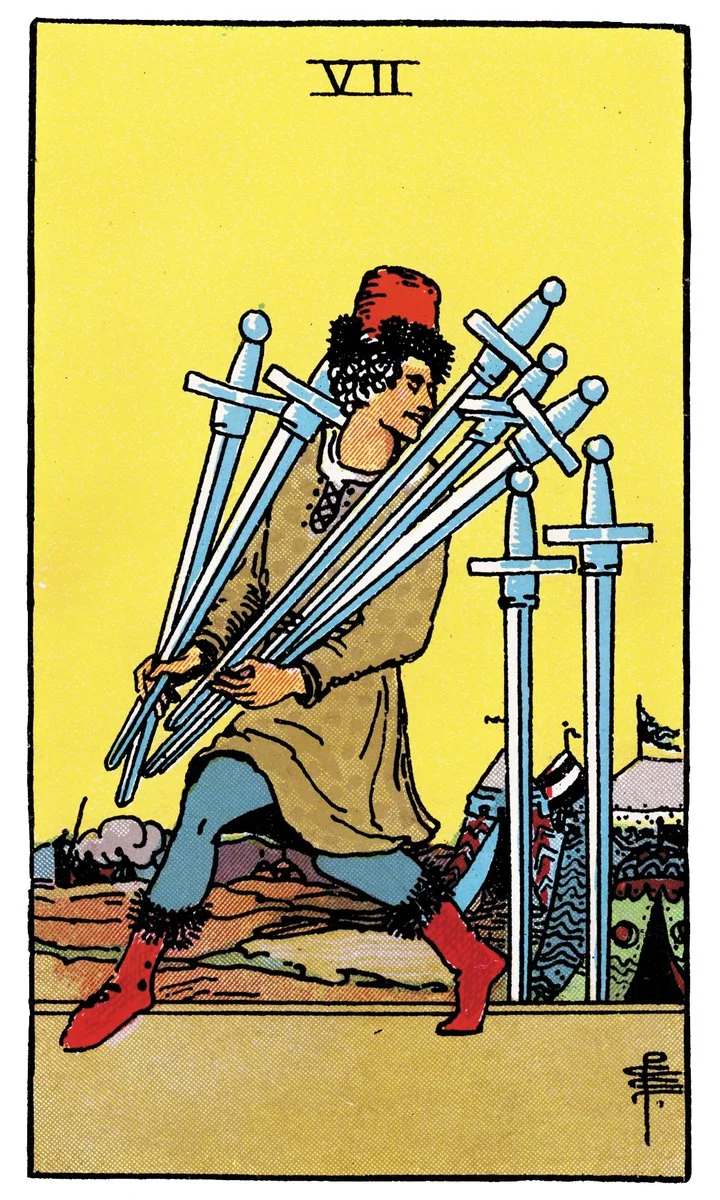
The Seven of Swords shows a man carrying five swords out of an armed camp, glancing back over his shoulder. Instead of fighting in the open, he relies on quickness, timing and a quiet exit, and two swords stay standing in the ground behind him. The card is about selective action: taking what you think matters most while avoiding a direct confrontation with the group.
In readings, the Seven of Swords often comes up around what to share, where to draw boundaries and how to protect yourself. It doesn’t automatically mean betrayal or lies, though it can describe a situation where openness has broken down. The question is whether keeping your moves private protects a fair boundary, or lets you dodge a responsibility you share with others.
- Upright keywords
- strategy, discretion, secrecy, acting alone, avoiding confrontation, withholding information
- Reversed keywords
- coming clean, secrets coming out, exposure, asking for advice, rethinking a tactic, doubling down
- Strategy: the figure on tiptoe
He doesn’t take on the camp in an open fight; he slips away on his toes holding five swords. The card’s energy is mental, quick and tactical. It favors wit and timing over force, reaching a goal without starting a war.
- Discretion: the swords he carries
Taking five swords and leaving two is a deliberate choice about what to take and what to leave behind. He shares or removes only what serves his purpose. That raises the question of where fair personal privacy ends and leaving out truths other people need begins.
- Exposure: the backward look
Looking back ties him to the place he’s leaving. Even when the plan works, he stays anxious about being found out. Going it alone or dodging the issue rarely brings real peace of mind; the unfinished business stays visible behind you.
Seven of Swords upright and reversed meaning
Seven of Swords upright meaning
Upright, the Seven of Swords means pursuing a goal through quiet tactics and discretion, sidestepping a direct clash and sometimes keeping information to yourself.
Working quietly
The situation pushes you to handle things quietly instead of starting an open debate. You might keep plans under wraps until they’re secure, protect your work from being taken, or step back from a pointless dispute without a showdown. Ask whether keeping your moves private protects a fair interest, or just puts off a conversation you’ll have to have anyway.
Relying on yourself
You may feel you can only rely on your own wits, which can put distance between you and the group’s rules or expectations. That protects your independence, but carrying the swords alone, without anyone’s agreement, keeps you on guard. Be honest about what you won’t negotiate openly, and whether going solo is a considered choice or an instinct to avoid accountability.
Seven of Swords reversed meaning
Reversed, the Seven of Swords usually means a hidden plan or half-truth is getting hard to keep up, which leads to exposure or an honest rethink.
When the cover starts to slip
A secret move or something left unsaid gets harder to keep up once people start asking questions. The secret now creates more friction than the problem it was meant to avoid. When hiding takes more effort than honesty, the urge to conceal gives way, either to exposure or to telling the truth yourself.
Asking for advice instead of hiding
Instead of trying to outsmart a complicated situation alone, you have a chance to admit mistakes, get good advice or drop the defensive act. The other path is doubling down on excuses. Which one it is depends on whether the person is willing to answer questions directly or keeps changing the subject.
Is the Seven of Swords a yes or no card?
No. The Seven of Swords is a no for questions that depend on trust, openness or a shared agreement, because something important isn’t being said. If you’re asking whether to keep a plan private or make a quiet exit, it leans yes, as long as you aren’t breaking a promise. Reversed, it points toward bringing things into the open before you decide.
Seven of Swords symbolism
A figure tiptoes away with five blades and leaves two behind: stealth, taking only part of what’s there and the risk of being seen define the scene.
- Swords held by the blade
He carries five swords bundled in his arms, gripping the bare blades.
Swords stand for thought, communication and decisions. Holding them by their sharp edges instead of the hilts suggests that handling sensitive information, or a plan you made alone, carries real risk. The move is nimble but precarious: one slip and he gets hurt, even as he makes off with the prize.
- The backward glance
As he walks away, he turns his head to look back toward the tents.
The look back shows he knows he could be watched, and that the departure isn’t finished. It suggests an uneasy conscience, sharp caution or the expectation of being found out. Looking back while moving forward shows that actions taken in secret stay tied to the place you’re leaving.
- The two swords left behind
Two swords remain stuck upright in the ground behind him.
Leaving two swords shows the mission is incomplete. You can’t take every advantage or remove every risk when you act alone. The blades left in the camp can still be picked up by others, like consequences you can’t completely outrun.
- The camp
A cluster of tents stands in the background.
The camp stands for the group: its structure, shared agreements and authority. Slipping away from it shows a break from group norms. The scene sets the oversight inside the camp against one person’s maneuvering outside it.
Watercolor deck
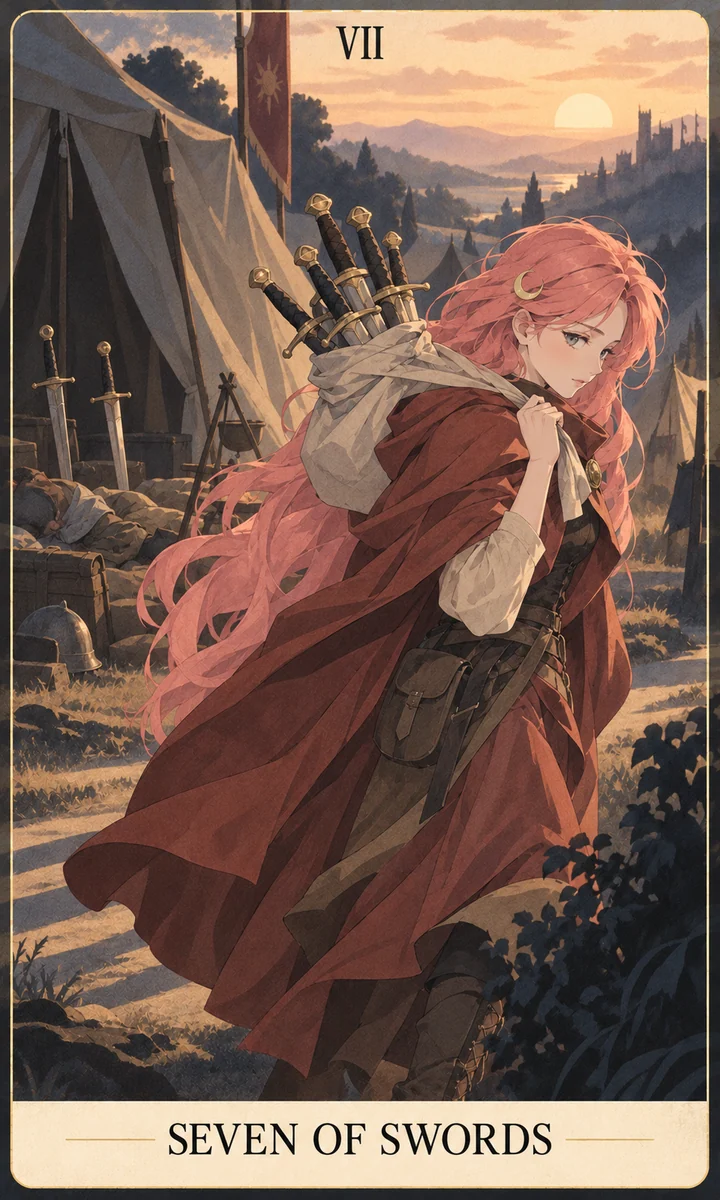
The watercolor figure moves stealthily between the tents, eyes darting back toward the camp while clutching a bundle of blades. Soft brushwork blurs the edges of the camp, so the focus stays on that quick, quiet moment of slipping away unnoticed over bare ground.
Seven of Swords in love and relationships
In love, the Seven of Swords asks whether privacy is protecting a fair personal boundary or covering a way around what you agreed on together.
Seven of Swords as feelings
Upright · They may feel guarded, holding back what they really think for fear of conflict, judgment or losing their freedom. There’s interest, but it comes with caution, and they show you only part of themselves.
Reversed · The strain of holding back becomes obvious. They may want to come clean and drop the act, though some people turn defensive and avoidant when pushed for emotional honesty.
An imbalance in openness
Upright · One of you may be making decisions alone, avoiding hard conversations or doing things the other doesn’t know about. That doesn’t prove cheating, but it does show a lack of open cooperation.
Reversed · Hidden grievances or unspoken worries start coming to the surface. Either you sit down together and drop the pretenses, or trust wears down further as the dodging continues.
Where it’s heading
Upright · Quiet distance will last until someone risks a frank conversation. As long as the relationship runs on tactics, real intimacy can’t take root.
Reversed · You reach a point where evasion stops working. Moving forward means dropping manipulative habits and facing the facts together; continuing to dodge accountability leads to a sudden collapse of trust.
Seven of Swords career meaning
At work, the Seven of Swords means weighing smart discretion and independent planning against the risks of going around your colleagues.
Playing it close to the chest
Upright · You’re working with sharp strategy and calculated effort. You may be protecting your own contributions, working behind the scenes or moving through office politics carefully.
Reversed · Leaning on shortcuts, or fooling yourself about where you stand, catches up with you. Asking for honest feedback is a good turn; dodging criticism leaves you exposed.
Discretion at work
Upright · Your own goals come before teamwork for now. You may need to act discreetly while negotiating an exit, handling confidential information or protecting an idea from being taken.
Reversed · Side arrangements or cut corners invite scrutiny. Rebuilding credibility means reporting transparently and following the team’s shared standards instead of working off the books.
Where your work is heading
Upright · Working independently can win you a quick advantage or let you leave an unhealthy job without drama. It rarely builds lasting alliances, though.
Reversed · Issues you left unresolved need to be settled. Success depends on coming to the table and communicating plainly, with results people can check instead of stealth.
Seven of Swords money and finances
With money, the Seven of Swords points to independent financial moves and hidden costs, and asks whether every arrangement is fully above board.
Money kept separate
Upright · Money may come from clever resourcefulness, a niche opportunity or a venture you keep separate from shared funds. Make sure it all fits your formal agreements.
Reversed · Questionable workarounds or murky balances threaten your stability. Income steadies once every source is clear and legitimate.
Spending out of sight
Upright · Spending tends to be private, whether you’re building a personal reserve or making purchases you haven’t mentioned. Watch for unrecorded commitments that cause strain later.
Reversed · Hidden expenses or overlooked debts come to light, and careful accounting and openness are needed to stop the leaks.
Protecting your own base
Upright · Building a personal safety net is reasonable, as long as it doesn’t break obligations you share with someone else.
Reversed · Relying on risky tricks or dodging what you owe undermines your security. Long-term health means facing the real numbers.
Seven of Swords in a tarot spread
Where the Seven of Swords lands in a spread changes what it describes. Here is how it usually reads in five common positions, upright and reversed.
- Present situation
- Upright: things are being handled through quiet planning and solo moves rather than open discussion. Reversed: what was kept quiet is starting to come out.
- Feelings
- Upright: they’re guarded and protecting themselves, which limits how openly they talk. Reversed: they may want to come clean, or get defensive when pressed.
- Obstacle
- Upright: going around a direct conversation breeds distrust and leaves practical problems unresolved. Reversed: doubling down on excuses instead of answering questions.
- Advice
- Upright: as advice, the Seven of Swords says choose your battles, keep key plans private and steer clear of dishonest shortcuts that could backfire. Reversed: be the one who brings it into the open.
- Outcome
- Upright: a quiet exit or solo move works for a while. Reversed: whatever was left out will have to be answered for.
To read the Seven of Swords alongside other cards, see Five of Swords · Two of Swords · The Moon · Tarot beginner’s guide.
Seven of Swords tarot card FAQ
What does the Seven of Swords mean?
The Seven of Swords means strategy, independent action and avoiding a head-on conflict. It shows up when someone handles a situation through quiet maneuvering, discretion or a partial retreat instead of an open confrontation. It can involve keeping information back, but it doesn’t automatically mean deceit.
What does the Seven of Swords reversed mean?
Reversed, the Seven of Swords means concealment has stopped working. Secrets or shaky shortcuts come out, and the person either admits it and looks for good advice or keeps up a pretense that no longer holds. It can also be a chance to come clean before anyone has to ask.
What does the Seven of Swords mean as feelings?
As feelings, the Seven of Swords suggests someone who is guarded and reluctant to show their full hand. They may fear confrontation, value their independence or feel they need to tread carefully to protect themselves. There may be real interest, but they’re sharing only part of what they feel.
Does the Seven of Swords mean cheating?
Not on its own. The Seven of Swords can point to deception when other cards and real facts back it up, but it more often describes self-protection: holding back opinions to avoid arguments, or wanting private space within a committed relationship. One card can’t prove that someone is cheating.
What does the Seven of Swords reversed mean in love?
In love, the Seven of Swords reversed usually marks the moment hidden tension, half-truths or secret behavior come into the open. That can be a chance to clear the air, as long as both of you choose honest accountability over staying defensive.
What does the Seven of Swords mean as advice?
As advice, the Seven of Swords says be strategic: choose your battles and keep important plans private until they’re ready. It also warns against shortcuts that rely on misleading people, because they tend to backfire. If you’re keeping something back, ask whether it’s a fair boundary or a way to avoid a conversation you owe someone.