
What does the Five of Swords mean in tarot?
The Five of Swords is about a conflict settled by domination instead of compromise. One person gets what they wanted, proves they were right or takes control, but does it in a way that humiliates or drives others off. The real question is what the win cost: taking the spoils of an argument often breaks the alliance underneath it and leaves the winner alone on the field.
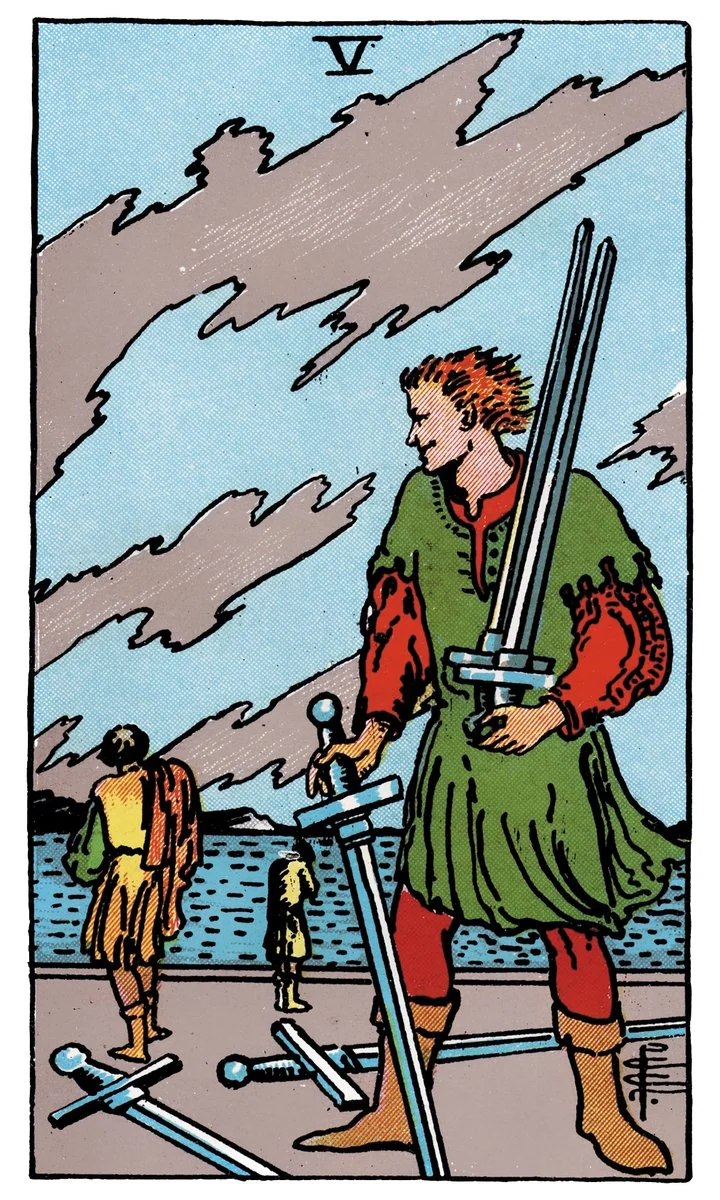
In the Rider–Waite–Smith card, a man gathers fallen swords with a smug look, glancing back at two downcast figures walking away toward choppy water under jagged clouds. The swords scattered on the ground show the battle is over, but the emotional cost is high. The card asks whether defending your ego or winning outright is worth a lasting rift.
- Upright keywords
- conflict, a hollow victory, winning at all costs, humiliation, defeat, broken alliances
- Reversed keywords
- making peace, reconciliation, lingering resentment, holding a grudge, owning the damage, ending a feud
- Domination: gathering the blades
The man collects five swords, three in his arms and two still on the ground at his feet. Swords stand for thought and argument, so taking all of them suggests an attempt to control the whole conversation and leave the other side with nothing. The win came through intimidation, not agreement, and overpowering someone into giving in destroys the ground for any future partnership.
- Alienation: the figures walking away
In the background, two disarmed figures walk off toward the sea with their heads down. They look defeated and finished with the exchange. This is the real price of an aggressive win: the other side may give up the field, but they take their loyalty, goodwill and effort with them. The winner is left alone with a pile of cold steel.
- Hostility in the air: jagged clouds
The torn gray clouds and choppy water reflect the harsh mood that cutting words and ruthless moves leave behind. In the Swords suit, the weather mirrors the mental climate. Here the broken sky shows an unsettled, hostile atmosphere where peace and real satisfaction can’t take root until people stop being defensive.
Five of Swords upright and reversed meaning
Five of Swords upright meaning
Upright, the Five of Swords means a conflict won at someone else’s expense: pushing hard to win damages the connection and leaves resentment behind.
A win that costs too much
A dispute has ended with a clear winner and loser rather than a shared resolution. One side pressed its advantage through intimidation, cutting remarks or relentless argument until the other gave up and walked away. The goal was reached, but trust collapsed. A silenced opponent is not an ally, so ask whether pressing your advantage is worth the ongoing estrangement at home or at work.
Needing to be right
A strong urge to prove yourself right can override empathy, so you put protecting yourself or coming out on top ahead of talking things through. Beating a challenge may feel good for a moment, then cold once you notice the allies you’ve lost. Often the fear underneath is of looking weak or losing, and insisting on total victory tends to create exactly the rejection and hostility you were guarding against.
Five of Swords reversed meaning
Reversed, the Five of Swords usually means a choice: lay down your weapons and start repairing things, or keep nursing the old grievance.
Resentment that goes underground
The open fighting stops, but bitterness keeps working beneath the surface, fueling passive resistance or fantasies of getting even. The loser plans a comeback while the winner stays on guard. Pride keeps anyone from admitting the harm done, so the cycle of quiet spite drags on and old wounds never close.
Counting the cost and starting to repair
Both sides may see that keeping the fight going hurts everyone and become willing to drop the hostility. You decide the relationship matters more than your pride, stop the provoking remarks and take responsibility for your part. The turning point is whether the gloating and blaming actually stop, which opens the door to sincere apologies and slowly rebuilding trust.
Is the Five of Swords a yes or no card?
No. The Five of Swords is a no, especially for questions about cooperation, peace of mind or reaching an agreement, because it describes a fight where someone wins and the relationship loses. If you’re only asking whether you can win, it may say yes, but at a cost that rarely feels worth it. Reversed, it softens only if both sides stop the hostility and own the damage.
Five of Swords symbolism
The emptied battlefield, the collected weapons and the stormy weather together show how ruthlessness leaves you alone.
- The collected swords
The man in front holds three swords, with two more lying on the ground at his feet.
Swords stand for thought, speech and conflict. Gathering all five is an attempt to hold every advantage, disarm the other side and control the story, leaving the others with no defense at all. But with his hands full of blades he looks awkward, a sign that hoarding control is its own burden and leaves no room for working together.
- The figures walking away
Two downcast figures turn their backs and walk toward the shore.
Their slumped shoulders show defeat and a complete withdrawal. Giving up is not the same as agreeing; they are leaving an exchange that turned hostile or humiliating. Next to the triumphant man in front, they show that domination drives people away. He holds the ground, but the people who once stood with him are gone.
- The smirk
The man looks back over his shoulder with a smug half-smile.
His expression shows the ego behind the contest. It isn’t grim necessity or regret over a hard dispute; it’s contempt and satisfaction at having overpowered others. Paired with the gathered weapons, the smirk turns a disagreement into a personal rupture: the goal wasn’t only to solve a problem, but to put the other side down.
- Jagged clouds
Torn, windswept gray clouds stretch over choppy water.
The ragged clouds echo the agitation, harsh words and upset left behind after a fight. Unlike steady rain, these sharp shapes suggest the cutting aftermath of a clash and goodwill cut off. Over the distant sea, the restless weather shows that the whole atmosphere is still disturbed, with no calm or warmth for anyone left on the field.
Watercolor deck
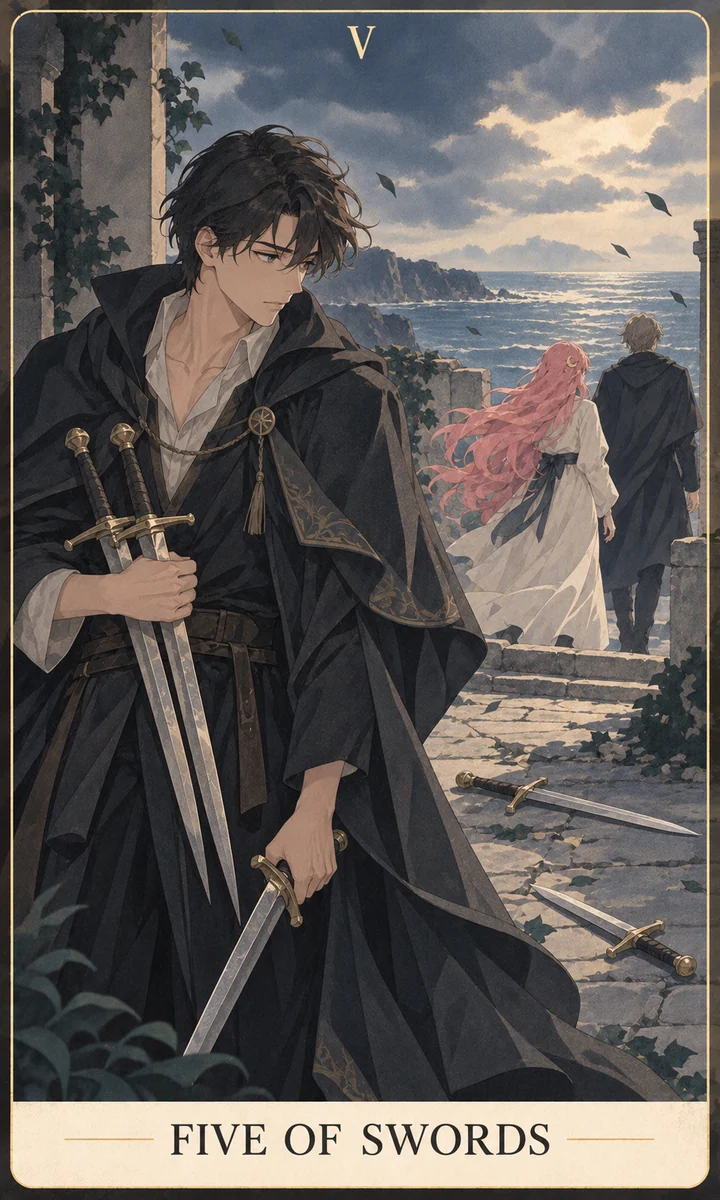
In the watercolor, a man deliberately gathers fallen blades along the water’s edge while two figures walk off into the distance beneath brooding clouds. The focus stays on the act of collecting, setting his solitary armful of metal against the empty shoreline left behind.
Five of Swords in love and relationships
In love, the Five of Swords means the need to win arguments is wearing away safety, affection and respect between you.
Five of Swords as feelings
Upright · They feel defensive and irritable, and want the upper hand when you disagree. They may care more about scoring points or proving you wrong than about staying close, treating emotional conversations as battles to win.
Reversed · They’re torn between exhaustion and lingering ill will. They may be tired of the hostility and want the fighting to end, or they may be quietly holding a grudge and waiting for a chance to settle the score.
Power struggles
Upright · Power struggles, sarcasm, the silent treatment or outright verbal cruelty leave one partner feeling bullied and pulling away. The mood is adversarial, not cooperative.
Reversed · Everything depends on whether the humiliation stops. If you both admit the constant bickering is killing your closeness, things can start to cool down. If the sneering and scorekeeping continue, the relationship stays stuck in cold distance and quiet payback.
Where it’s heading
Upright · If the need to dominate every argument continues, the relationship drifts toward estrangement or a bitter breakup where one person simply walks away beaten. It can’t last unless the weaponized communication stops.
Reversed · A real turning point is possible if you both call off the fight, apologize sincerely and set respectful boundaries again. Without that shared willingness to be vulnerable, the connection slowly dissolves into silent bitterness.
Five of Swords career meaning
At work, the Five of Swords means cutthroat office politics and hollow wins, and a choice between rebuilding cooperation and undermining each other.
A cutthroat mindset
Upright · A ruthless, hypercompetitive streak drives your approach or a colleague’s. The aim is to outmaneuver rivals, take all the credit or push a personal agenda no matter who gets hurt.
Reversed · It comes down to self-awareness. Someone may realize toxic competition has cost them teammates they need and try to become more supportive, or they may brood over grievances and quietly undermine colleagues while holding back cooperation.
When teamwork breaks down
Upright · Cooperation has turned into suspicion, backstabbing or zero-sum contests. Someone may win the promotion or the lead role, but former allies won’t back them, and the project stalls under passive resistance.
Reversed · Collaboration can be saved if people agree on transparent ways of working and stop the blame games. When leaders openly address past mistreatment and remove unfair penalties, colleagues can gradually work together again.
Where your work is heading
Upright · Getting ahead through aggressive politics leaves you leading alone, with alliances that fall apart under stress. Winning this battle can damage your reputation for a long time.
Reversed · Progress depends on taking the hostile dynamics apart. If people drop their grudges and get back to basic courtesy, the team can settle down and rebuild its output. If quiet vendettas continue, turnover and repeated failures tend to follow.
Five of Swords money and finances
With money, the Five of Swords means aggressive self-interest, disputes or unfair deals that put your long-term security at risk.
Gains that burn bridges
Upright · Money may come through aggressive tactics, profiting from someone else’s bad luck or enforcing a contract so ruthlessly that the business relationship is ruined.
Reversed · You weigh whether recovering a disputed sum is worth the legal costs and damaged relationships, and you may choose a modest settlement over a long, spiteful fight.
The cost of fighting
Upright · Costs pile up from legal battles, fines or broken contracts caused by hostile dealings. Walking away from a bad deal may be the only way to stop the bleeding.
Reversed · Expenses settle down once you stop pouring money into payback or battles of pride.
Deals that can’t last
Upright · Arrangements are fragile because they rest on pressure rather than real mutual benefit, which invites someone to break them later.
Reversed · Rebuilding stability takes clear, fair terms that protect both sides and drop the one-sided clauses that started the conflict.
Five of Swords in a tarot spread
Where the Five of Swords lands in a spread changes what it describes. Here is how it usually reads in five common positions, upright and reversed.
- Present situation
- Upright: you’re in a hostile confrontation or living with the lonely aftermath of an empty win. Reversed: the fighting has stopped, and either peace or a grudge comes next.
- Feelings
- Upright: defensiveness, wounded pride and a need to be proven right outweigh empathy and calm thinking. Reversed: they’re tired of fighting, or quietly holding a grudge.
- Obstacle
- Upright: refusing to give ground or admit fault keeps both sides locked in damaging hostility. Reversed: resentment nobody says out loud keeps the conflict alive.
- Advice
- Upright: as advice, the Five of Swords says drop the urge to humiliate the other side; walking away or apologizing saves more than winning. Reversed: own your part and stop keeping score.
- Outcome
- Upright: the rift may widen into a lasting separation. Reversed: genuine humility makes room for slow repair.
To read the Five of Swords alongside other cards, see Five of Wands · Seven of Swords · Justice · Tarot beginner’s guide.
Five of Swords tarot card FAQ
What does the Five of Swords mean?
The Five of Swords means a conflict won through domination, trickery or a callous disregard for others. The winner gets what they wanted, but the victory is hollow because it breaks trust and leaves them isolated. The card is a reminder that how you win matters as much as whether you win.
What does the Five of Swords reversed mean?
Reversed, the Five of Swords means either a move toward making peace or resentment that keeps simmering after the fight. Which way it goes depends on whether both sides stop the hostile behavior, put their weapons down and acknowledge the hurt the conflict caused.
What does the Five of Swords mean as feelings?
As feelings, the Five of Swords means irritation, feeling attacked and a defensive need to win the argument at any cost. The person feels cut off and focused on protecting themselves. They often assume that admitting weakness would only bring more disrespect or another defeat.
What does the Five of Swords mean in love?
In love, the Five of Swords points to destructive habits like sarcasm, scorekeeping and putting pride ahead of harmony. Power struggles replace care, leaving one partner defeated and withdrawn while the other feels justified but ends up emotionally alone. Reversed, it asks whether you can both stop fighting long enough to repair things.
Does the Five of Swords reversed mean reconciliation in love?
Not necessarily. The Five of Swords reversed can mark the end of active fighting, but that may simply be cold exhaustion or buried resentment. Real reconciliation takes clear apologies, changed behavior and a shared decision to drop the spiteful habits.
What does the Five of Swords mean as advice?
As advice, the Five of Swords says pick your battles and don’t win at any cost. If you’re tempted to humiliate the other side, stop; walking away or apologizing usually saves more than winning would. If you’ve already won, look honestly at what it cost you and whether anything can still be repaired.